
10 Best Rank Trackers for SEO in 2026 (Ranked and Reviewed)
Quick Takeaways
- The best rank tracker for most teams in 2026 is Nightwatch — it combines daily updates, ZIP-code precision, AI search visibility, and affordable pricing from $32/month
- Update frequency is one of the biggest differentiators: daily tracking catches ranking drops before they compound into real traffic losses
- Location granularity separates serious tools from basic ones — city- and ZIP-code-level tracking is essential for local SEO
- Modern rank trackers now monitor AI-powered search platforms (ChatGPT, Google AI Overviews) alongside traditional rankings
- Free tools like Google Search Console are a starting point, but lack the granularity and competitor data that paid rank trackers provide
- Multi-site support, white-label reporting, and competitor tracking are table stakes for agencies
Choosing the best rank tracker for your SEO programme is one of the most important tooling decisions you will make. Rankings are the clearest leading indicator of organic traffic, and a great rank tracker turns raw position data into actionable intelligence — showing you not just where you stand, but where you are heading and why. Whether you need a keyword rank tracker for a single site or a multi-client agency platform, the right tool depends on your update frequency needs, location precision requirements, and budget.
This guide ranks and reviews the ten best rank trackers available in 2026, based on hands-on evaluation across accuracy, update frequency, location granularity, AI search visibility, reporting, and pricing.
- How We Evaluated These Tools
- Quick Comparison Table
- 10 Best Rank Trackers for 2026
- How to Use a Rank Tracker Effectively
- Frequently Asked Questions
How We Evaluated These Tools
We assessed each rank tracker against six criteria that matter most to SEO professionals:
- Accuracy — how closely the reported positions match real SERP results, and whether the tool cross-references multiple Google data centres to minimise anomalies
- Update frequency — whether rankings refresh daily, on-demand, or only weekly
- Location granularity — whether the tool can track rankings at country, city, or ZIP-code level, which is essential for local SEO strategies
- AI search visibility — whether the platform tracks mentions and visibility in ChatGPT, Google AI Overviews, Perplexity, and other AI-powered search surfaces
- Pricing and scalability — value per tracked keyword, free trial availability, and how pricing scales as keyword volume grows
- Reporting and integrations — white-label options, Looker Studio and Search Console connectivity, automated report scheduling, and ease of sharing data with clients
Quick Comparison Table
| Tool | Best for | Update frequency | Starting price | Free trial |
|---|---|---|---|---|
| Nightwatch | Accuracy + local + AI visibility | Daily | $32/month | 14 days |
| Semrush | All-in-one marketing suite | Daily | $139/month | 7 days |
| Ahrefs | Backlink + keyword research | Daily | $29/month | Limited free |
| SE Ranking | Agencies on a budget | Daily | $52/month | 14 days |
| AccuRanker | On-demand refreshes | Daily + on-demand | $116/month | 14 days |
| Moz Pro | Beginners and small teams | Daily | $39/month | 30 days |
| Advanced Web Ranking | Large agencies | Daily | $49/month | 7 days |
| SERPWatcher (Mangools) | Freelancers + small sites | Daily | $29/month | 10 days |
| Wincher | Simple tracking + affordable | Daily | $12/month | 7 days |
| Google Search Console | Free baseline data | Weekly avg. | Free | N/A |
10 Best Rank Trackers for 2026
1. Nightwatch
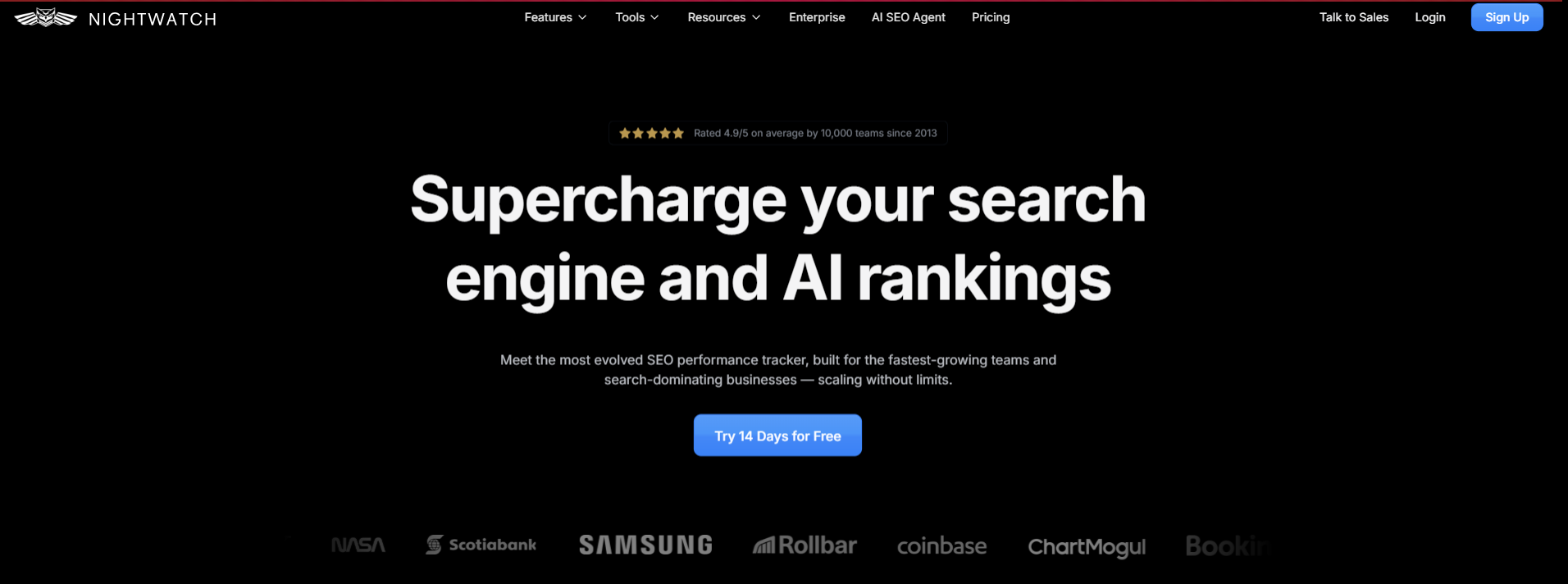
Best for: Teams that prioritise rank tracking accuracy, local SEO, and AI search visibility
Nightwatch is the most precise and feature-complete dedicated rank tracker on this list. Brands like Shopify and Booking.com use it. You can start with a 14-day free trial, with paid plans beginning at $32/month for 250 daily tracked keywords.
What sets Nightwatch apart is the combination of depth and precision. It tracks rankings across Google and Bing, and now monitors your presence in AI-powered search surfaces including ChatGPT, Google AI Mode, and AI Overviews — a critical capability as AI-generated answers continue to reshape how users interact with search results.
Location tracking is a standout feature. Nightwatch monitors rankings from over 100,000 locations worldwide with ZIP-code accuracy, so you can track how a specific page ranks in a specific neighbourhood rather than just a country average. This level of granularity is essential for any business doing local rank tracking.
The platform also includes a keyword research tool, automated site auditing, and SERP tracking with rich SERP feature detection. Integration with Google Looker Studio and Search Console makes it straightforward to build comprehensive dashboards and share results with clients. An optional SEO AI agent automates time-consuming tasks like keyword clustering and site health monitoring.
Key features:
- Daily rank tracking with ZIP-code level location precision (100,000+ locations)
- AI search visibility tracking for ChatGPT, Google AI Mode, and AI Overviews
- SERP feature tracking (Featured Snippets, Local Pack, and more)
- Keyword research, site auditor, and competitor tracking in one platform
- White-label reporting and Looker Studio / Search Console integration
- Up to 50 tracked sites, suitable for growing agencies
Pricing: From $32/month for 250 daily tracked keywords. Scales to $559/month for 10,000 daily keywords. Custom pricing for larger volumes. 14-day free trial included.
Verdict: Nightwatch is the best rank tracker for teams where accuracy and local granularity are non-negotiable. The AI visibility layer makes it genuinely future-proof, and the price-to-keyword-volume ratio beats every tool at this capability level.
2. Semrush
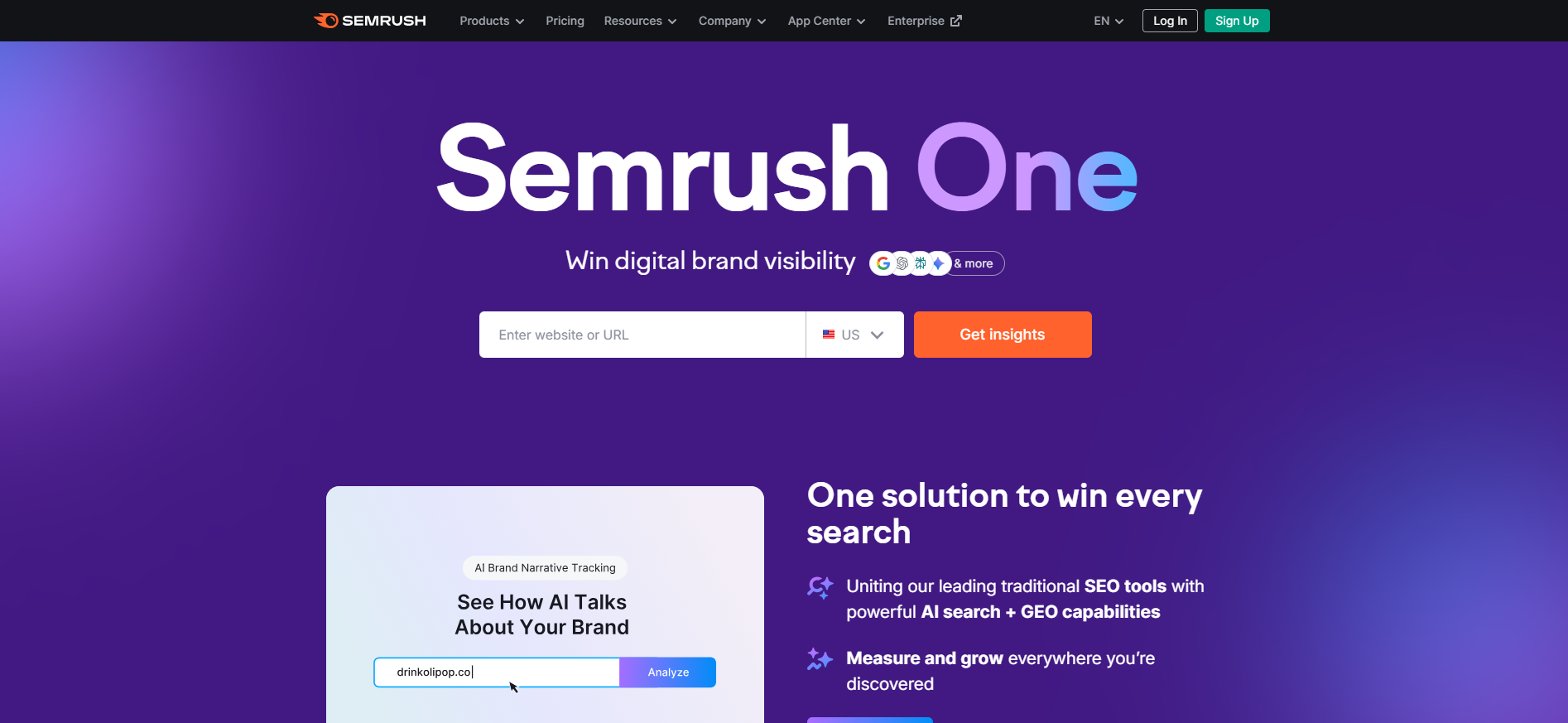
Best for: Marketers who want rank tracking inside a full all-in-one SEO and marketing platform
Semrush is one of the most recognisable names in SEO. Its Position Tracking tool delivers daily rank updates for 500 to 5,000 keywords depending on plan, with access to SERP features, competitor comparisons, and historical data on Pro and Business tiers.
Beyond rank tracking, Semrush bundles keyword research, backlink analysis, content optimisation, social media management, and PPC research in a single platform. The Google Business Profile integration is useful for local SEO workflows. AI-powered keyword tools and a meta description generator add efficiency for content teams.
The main trade-off is cost — Semrush recently raised its pricing, with plans now starting at $139/month. That’s a steep entry point if rank tracking is your primary need. But if you want a single platform that handles the full digital marketing stack, Semrush is genuinely hard to beat.
Key features:
- Daily position tracking with SERP feature breakdown
- Historical ranking data (Pro and Business plans)
- Integrated keyword research, site audit, and backlink analysis
- AI Overviews and local pack tracking
- Google Business Profile integration
Pricing: From $139/month. 7-day free trial available.
Verdict: The best all-in-one option if you need more than rank tracking. Not the most economical choice if rank accuracy and volume are your primary criteria.
3. Ahrefs
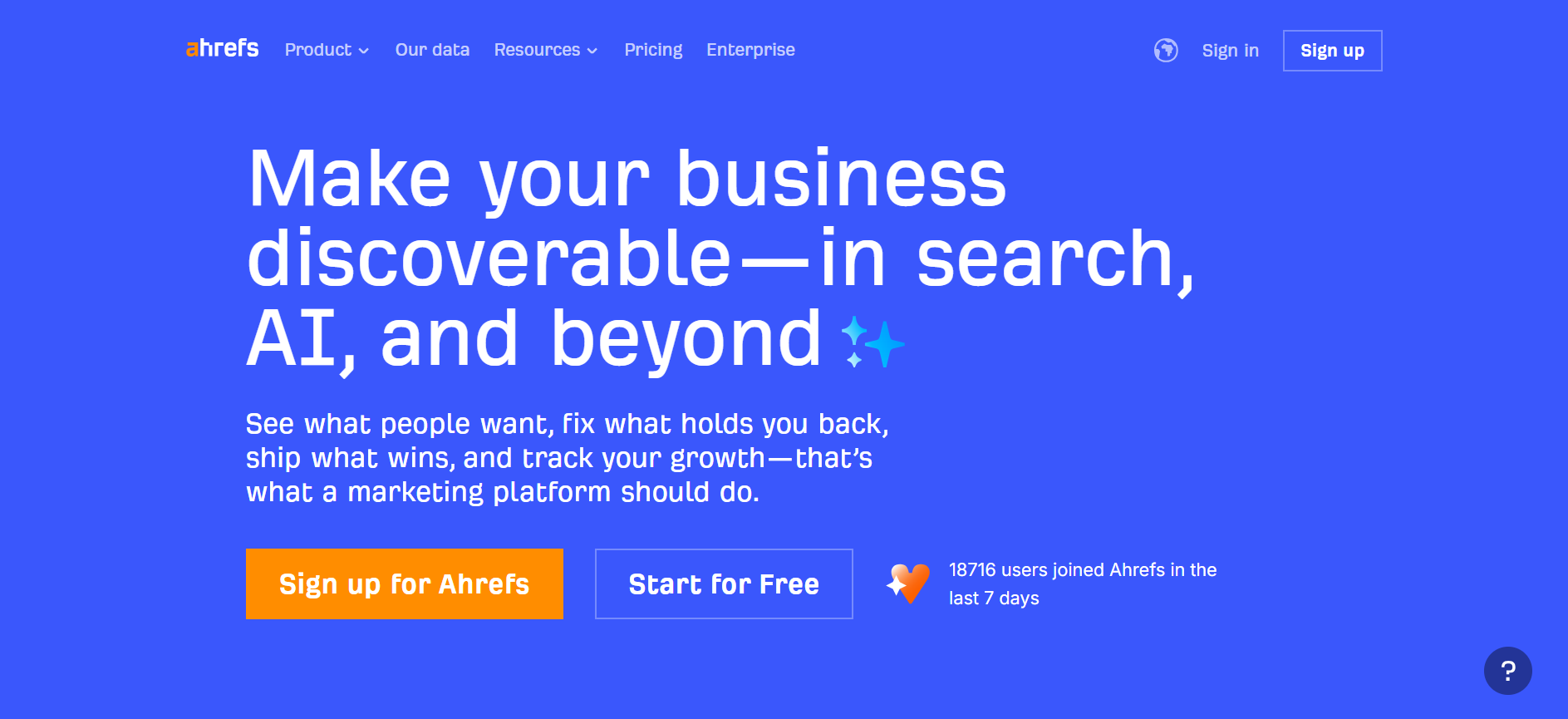
Best for: SEOs who need world-class backlink data and keyword research alongside rank tracking
Ahrefs is widely regarded as having the best backlink index in the industry, and its rank tracking — built into the Rank Tracker module — is solid. Daily updates, mobile vs desktop comparison, and SERP feature tracking are all included. The interface visualises organic click-through data and position distribution clearly.
The platform also includes Content Explorer, Site Explorer, a Site Audit tool, and AI-powered content tools. For e-commerce teams, Ahrefs tracks Amazon rankings alongside Google. The Lite plan at $29/month offers limited access, but meaningful rank tracking starts on Standard at $179/month.
Key features:
- Daily rank tracking with SERP history
- Competitor SERP analysis and gap identification
- Comprehensive backlink checker and site audit
- Automated reporting with periodic email summaries
- Site Audit equivalent features built in
Pricing: From $29/month (Lite, limited). Standard from $179/month. Limited free access; no traditional trial.
Verdict: The strongest choice if backlink analysis and organic research are as important as rank tracking. Rank tracking alone does not justify the price compared to dedicated tools — see how Nightwatch compares to Ahrefs for rank tracking if that’s your primary need.
4. SE Ranking
Best for: Agencies and freelancers wanting daily rank tracking at a competitive price
SE Ranking is a well-rounded SEO platform that punches above its price point. Rank tracking covers Google and Bing with daily updates, supports desktop and mobile separately, and includes location tracking at country, region, and city level. The white-label reporting module makes it a popular choice among digital marketing agencies.
The platform includes keyword research, a site auditor, backlink checker, and competitor analysis tools. Pricing is keyword-volume based and scales sensibly — the $52/month Starter plan covers 250 daily keywords, which is a solid entry point.
Key features:
- Daily rank tracking across Google and Bing
- City-level location tracking
- White-label reports with custom branding
- Built-in keyword research and site audit
- API access on higher plans
Pricing: From $52/month. 14-day free trial.
Verdict: One of the best value rank trackers for small agencies. Less depth than Nightwatch on local granularity and AI visibility, but excellent for the price.
5. AccuRanker
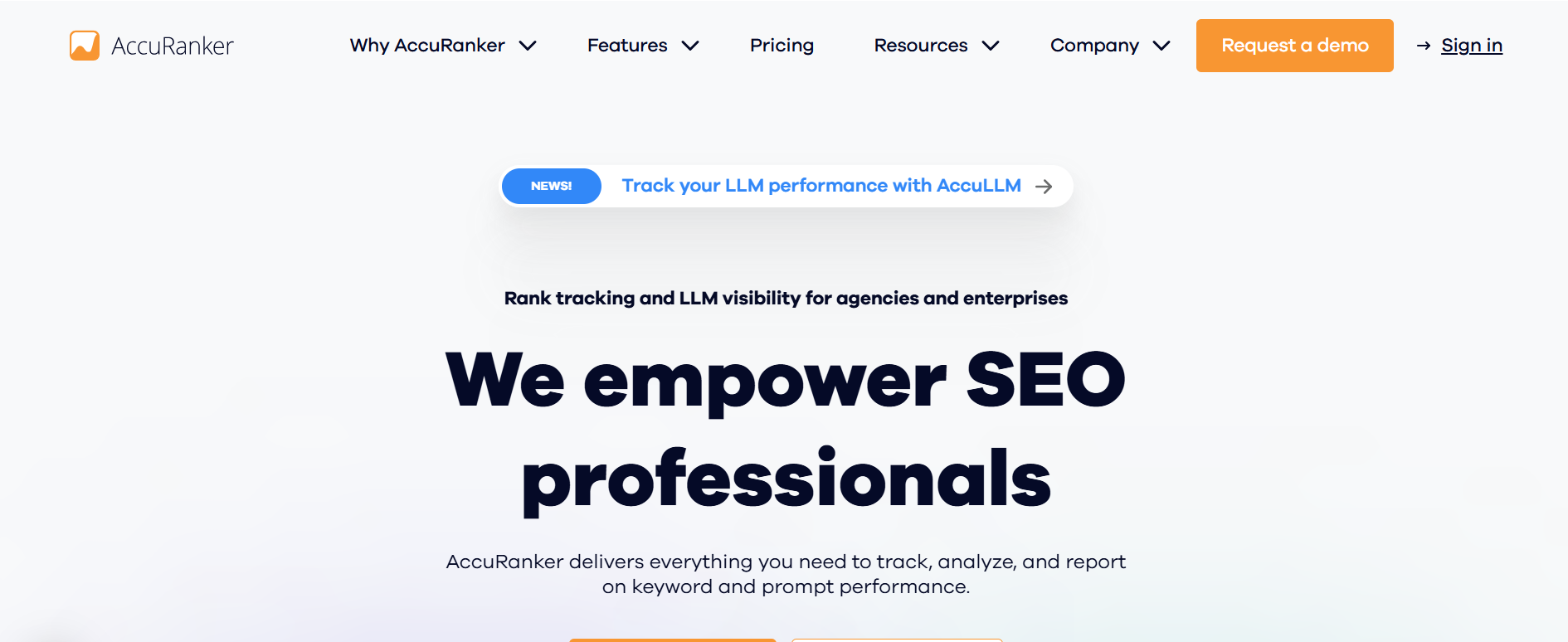
Best for: Teams that need on-demand rank refreshes and advanced Share of Voice metrics
AccuRanker is a dedicated rank tracking tool — it does not try to be an all-in-one platform. Its defining feature is on-demand manual rank refreshing: you can pull live SERP data for any keyword at any time, rather than waiting for the next daily cycle. This is valuable during active campaigns or when monitoring a competitor move.
It tracks over 50 SERP features including Featured Snippets and AI Overviews, and includes an Advanced Share of Voice metric that shows your overall market visibility across a keyword set. All plans include the same feature set — pricing only varies by keyword volume, starting at 1,000 keywords.
Key features:
- On-demand rank refresh at any time
- 50+ SERP features tracked including AI Overviews
- Advanced Share of Voice analysis
- Custom segments, filters, and tagging
- Looker Studio integration
Pricing: From $116/month for 1,000 keywords. 14-day free trial.
Verdict: The best choice when on-demand data freshness is a requirement. More expensive per keyword than Nightwatch, and lacks local tracking depth.
6. Moz Pro
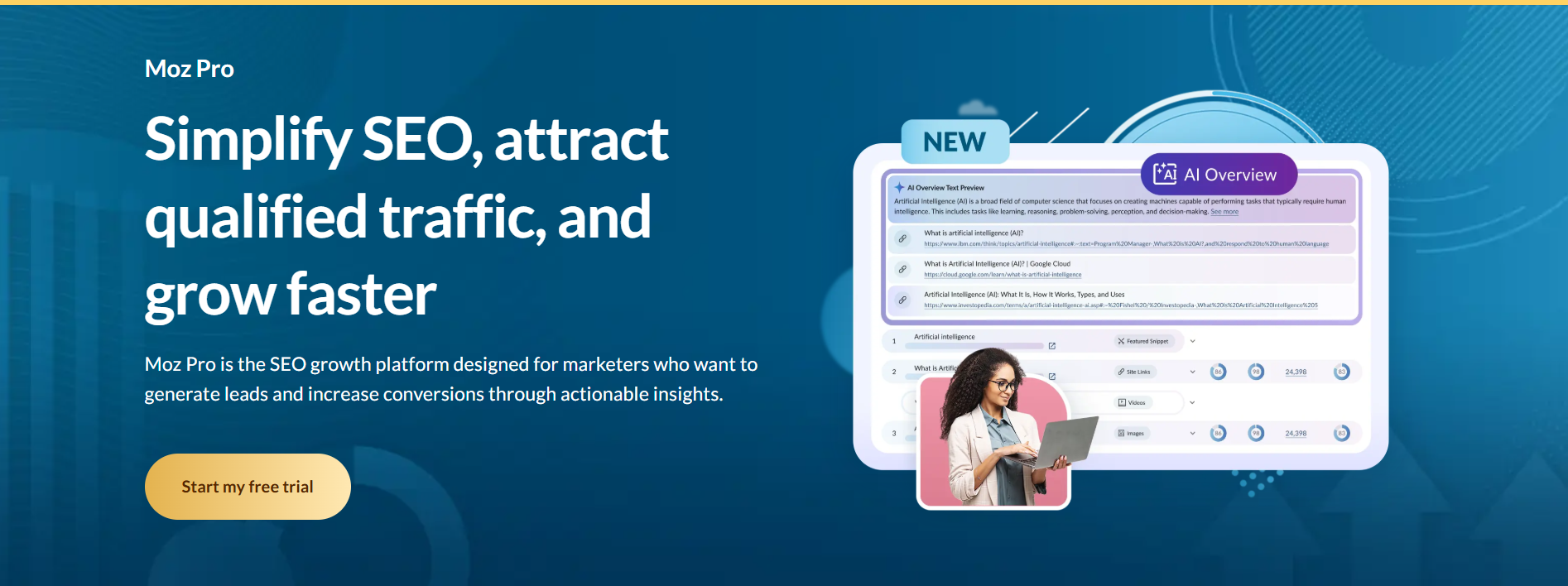
Best for: Beginners and small in-house teams learning SEO
Moz Pro has been a trusted name in SEO since 2004. Its rank tracker covers Google, Bing, Yahoo, and Google Mobile, with daily updates and on-demand rank checking. The Starter plan at $39/month tracks up to 50 keywords on one site — enough for a small business testing the waters.
The broader Moz Pro suite includes keyword research, backlink analysis, and on-page optimisation tools, all wrapped in an interface known for being approachable. The 30-day free trial is one of the longest in the industry.
Key features:
- Daily rank tracking on Google, Bing, Yahoo, and mobile
- On-demand rank checking
- Comprehensive SEO suite with keyword explorer and link analysis
- 30-day free trial (Medium plan)
- Active community forums and strong educational resources
Pricing: From $39/month (Starter, 50 keywords). Up to $299/month. 30-day free trial on Medium.
Verdict: A good starting point for beginners, but keyword volume limits make it insufficient for serious tracking at scale. Upgrade to a dedicated tracker as your programme grows.
7. Advanced Web Ranking (AWR)
Best for: Large agencies needing high keyword volumes and extensive white-label reports
AWR has been in the rank tracking business since 2002 and serves over 1,350 agencies worldwide. It covers 4,000+ search engines and data centres, supports high keyword volumes (from 7,000 on the starter plan up to 50,000 on Enterprise Plus), and offers sophisticated WYSIWYG white-label reporting.
All plans include local and mobile tracking, Google Data Integration, and SERP feature data. Users can request additional search engines or Google TLDs for international tracking workflows. Above-the-fold metrics and pixel measurements give additional insight into real-world SERP visibility.
Key features:
- 4,000+ search engines and data centres
- High keyword volumes (7,000–50,000+)
- WYSIWYG white-label report builder
- Local and mobile tracking on all plans
- Above-the-fold visibility metrics
Pricing: From $49/month (web-based). Agency plans from $139/month. 7-day free trial.
Verdict: Best for large agencies that need raw keyword volume and deep report customisation. Overkill for smaller teams; interface complexity reflects its enterprise focus.
8. SERPWatcher by Mangools
Best for: Freelancers, bloggers, and small businesses on a tight budget
SERPWatcher is part of the Mangools suite and is the most affordable full-featured rank tracker on this list. Plans start at $29/month, there is no domain limit, and the interface is deliberately clean and easy to navigate — ideal for users who do not need enterprise-level complexity.
Daily updates cover 100 to 1,500 keywords depending on plan. The 10-day free trial is generous, and pairing SERPWatcher with KWFinder (also from Mangools) gives you a solid keyword research workflow at a fraction of the cost of all-in-one platforms.
Key features:
- Daily rank tracking with unlimited domains
- Clean, beginner-friendly interface
- Dominance Index for overall visibility scoring
- Part of the Mangools suite (KWFinder, SERPChecker, etc.)
- 10-day free trial
Pricing: From $29/month (billed annually). 10-day free trial.
Verdict: The best budget rank tracker for small sites and freelancers. Keyword volume caps and limited integrations make it unsuitable once you scale beyond a handful of sites.
9. Wincher
Best for: Solo SEOs and small teams wanting simple, affordable daily tracking
Wincher is a no-frills rank tracker built for simplicity. It tracks daily rankings on Google, supports location targeting at country and city level, and sends automated weekly or on-demand email reports. The interface takes minutes to learn, and at $12/month for 100 keywords it is one of the cheapest entry points in the market.
Wincher integrates with Google Search Console for combined ranking and click data, and includes a basic competitor tracking module. It lacks the depth of dedicated enterprise tools but is a solid choice for solo consultants or small sites that just need clean, reliable daily position data.
Key features:
- Daily Google ranking updates
- City-level location tracking
- Search Console integration
- Automated email reports
- Competitor tracking on all plans
Pricing: From $12/month. 7-day free trial.
Verdict: Excellent value for individuals or very small teams. Not appropriate for agencies or high-volume tracking needs.
10. Google Search Console
Best for: Free baseline ranking data for any site
Google Search Console is not a rank tracker in the traditional sense, but it deserves a place on this list because it is free, authoritative, and widely used as a baseline. The Performance report shows average position, clicks, impressions, and CTR per query, filtrated by page, country, device, and date range.
The limitations are significant: it shows average position across all locations over a time window, not a precise rank at a specific location on a specific day. It cannot track competitors, does not show SERP features, and has a roughly 72-hour data lag. But as a free data source that plugs directly into Google’s own data, it is indispensable as a complement to any paid rank tracker.
Key features:
- Free with any Google account
- Official Google search performance data
- Query, page, country, and device filtering
- Integrates with Google Analytics and Looker Studio
- 16-month rolling data history
Pricing: Free.
Verdict: An essential free complement to any paid rank tracker, not a replacement. Use it alongside Nightwatch or another dedicated tool for complete coverage.
How to Use a Rank Tracker Effectively
A rank tracker is only as powerful as the workflow built around it. Here is how experienced SEO teams extract maximum value:
1. Organise keywords before you start tracking. Group keywords by topic, search intent, funnel stage, or client. This makes it far easier to spot patterns — a topic cluster dropping in unison usually signals a content or technical issue, whereas isolated drops point to competitive threats on specific pages. A well-organised keyword rank tracker setup also makes it easier to report to clients — each group maps to a deliverable, not a raw data dump.
2. Configure accurate location data from day one. If you do local SEO, set up ZIP-code or city-level tracking for every relevant location. Using country-level data for a business that primarily serves a single city is misleading. Tools like Nightwatch make it easy to track the same keyword across dozens of locations simultaneously, which is useful for multi-location SEO tracking.
3. Establish a baseline before making changes. Document current positions before launching any campaign or on-page update. This baseline is what lets you calculate the actual impact of your work and report ROI accurately to stakeholders.
4. Set alerts for significant movement. Most rank trackers support email or Slack notifications when a keyword moves more than a set number of positions. Configure these so you catch a ranking drop within 24 hours rather than discovering it at the next weekly review.
5. Cross-reference ranking data with traffic and conversions. A ranking gain that does not produce more traffic is a signal worth investigating — it may indicate a shift in search volume, a change in SERP layout, or a CTR problem. Connect your rank tracker to Google Analytics and Search Console to see the full picture.
6. Track competitors alongside your own site. Ranking drops are often not caused by your own pages getting worse — they are caused by a competitor getting better. Monitoring two or three key competitors in the same tracker makes it immediately obvious when you are being outranked and by whom.
Frequently Asked Questions
What is the best rank tracker for SEO?
Nightwatch is the best rank tracker for most SEO teams in 2026. It combines daily rank updates, ZIP-code-level location tracking, AI search visibility monitoring, and white-label reporting — at a starting price of $32/month. Semrush and Ahrefs are strong all-in-one alternatives if you also need keyword research and backlink analysis in the same platform.
How accurate are rank trackers?
The best rank trackers pull data directly from Google’s infrastructure and cross-reference multiple data centres to minimise anomalies. Tools like Nightwatch and AccuRanker are known for high accuracy. That said, rankings can fluctuate naturally throughout the day, so consistency matters more than any single data point — track the same keyword from the same location at the same time each day for reliable trend data.
What is the difference between daily and weekly rank tracking?
Daily tracking catches ranking drops within 24 hours, letting you react before a position loss compounds into a significant traffic decline. Weekly tracking is cheaper and sufficient for stable, mature sites, but it can leave you blind to algorithm updates or competitor movements for up to seven days. For competitive niches or active SEO campaigns, daily tracking is strongly recommended.
Can rank trackers track local rankings?
Yes. The best rank trackers support location-level granularity down to city, ZIP code, or even neighbourhood. Nightwatch tracks rankings from over 100,000 locations worldwide, making it particularly strong for local SEO workflows. SE Ranking and AccuRanker also offer solid local tracking options. Google Search Console gives you country-level data for free but cannot track specific local positions.
Is there a free rank tracker?
Google Search Console is the most widely used free option — it shows average position and click data per query, but does not let you track specific local positions or monitor competitors. Most paid tools offer free trials: Nightwatch offers 14 days free, Mangools SERPWatcher offers 10 days, and Moz Pro offers 30 days. For serious SEO work, a paid rank tracker is worth the investment in the time it saves and the data it surfaces.
How do I choose a rank tracker?
Start with your primary use case. If you do local SEO, prioritise location granularity. If you manage multiple clients, look for white-label reporting and multi-site support. If AI search visibility matters, choose a tool that tracks ChatGPT and AI Overview mentions alongside traditional rankings. Then compare update frequency (daily vs. weekly), pricing relative to keyword volume, and whether the tool integrates with your existing stack (Google Analytics, Looker Studio, Search Console).
The Bottom Line
The best rank tracker in 2026 is the one that matches how you actually do SEO — not just the one with the most features or the lowest price. For teams that care about accuracy, local granularity, and being prepared for AI-powered search, Nightwatch is the clear front-runner. For those who want rank tracking bundled into a broader marketing suite, Semrush or Ahrefs are logical choices. And for smaller budgets, SE Ranking, Wincher, or SERPWatcher provide genuine value without unnecessary complexity.
Whatever tool you choose, the habit of checking rankings consistently and acting on what you find is what separates SEO teams that grow from those that stagnate. Rank tracking is not a set-and-forget task — it is the early warning system for your entire organic strategy.
Start your 14-day free trial with Nightwatch and see why it is the rank tracker of choice for accuracy-focused SEO teams.