12 Best SEO MCP Servers in 2026 (Ranked and Tested)
Quick Takeaways
- An SEO MCP server is a small connector that lets any MCP-compatible AI assistant pull live data from your SEO tools and act on it — no copy-pasting CSVs, no glue scripts.
- The Nightwatch SEO MCP is the one we’d pick if you need rank tracking, AI search visibility, and site audits in a single connection — it’s an official server, hosted at
https://mcp.nightwatch.io/sse, included on every paid plan and during the 14-day trial. - Ahrefs, Semrush, SE Ranking, DataForSEO, and Advanced Web Ranking all ship official remote MCP endpoints in 2026 — pick based on the dataset you already pay for.
- Google Search Console and GA4 MCPs are essential add-ons. They’re free, open source (or official), and unlock the data your own site already generates.
- Niche MCPs — Screaming Frog (crawling), Peec AI (LLM citations), AlsoAsked (PAA), Serpstat (keyword data), Keywords Everywhere (volume/CPC) — let you assemble a workflow that’s stronger than any single SaaS dashboard.
The Model Context Protocol (MCP) only landed in late 2024, but by mid-2026 there are more than 60 SEO-specific MCP servers you can connect to an AI assistant. That’s a lot of new wiring — and most of it is genuinely useful.
If you already work with an MCP-aware AI client, this is the shortcut to giving it real SEO context. Instead of pasting in CSVs from Ahrefs or describing your rank tracker in a prompt, the AI can call the tool directly, get structured data back, and reason over it.
This guide is a tested rundown of the SEO MCP servers worth knowing in 2026. I’ve used most of these in production workflows over the last six months and ranked them by usefulness for everyday SEO work — not by raw tool count.
- Nightwatch SEO MCP
- Ahrefs MCP
- Semrush MCP
- SE Ranking MCP
- DataForSEO MCP
- Advanced Web Ranking MCP
- Google Search Console MCP
- Google Analytics 4 MCP
- Screaming Frog MCP
- Serpstat MCP
- Peec AI MCP
- Keywords Everywhere, AlsoAsked, and other niche MCPs
- FAQs
What is an SEO MCP Server (and Why Should You Care)?
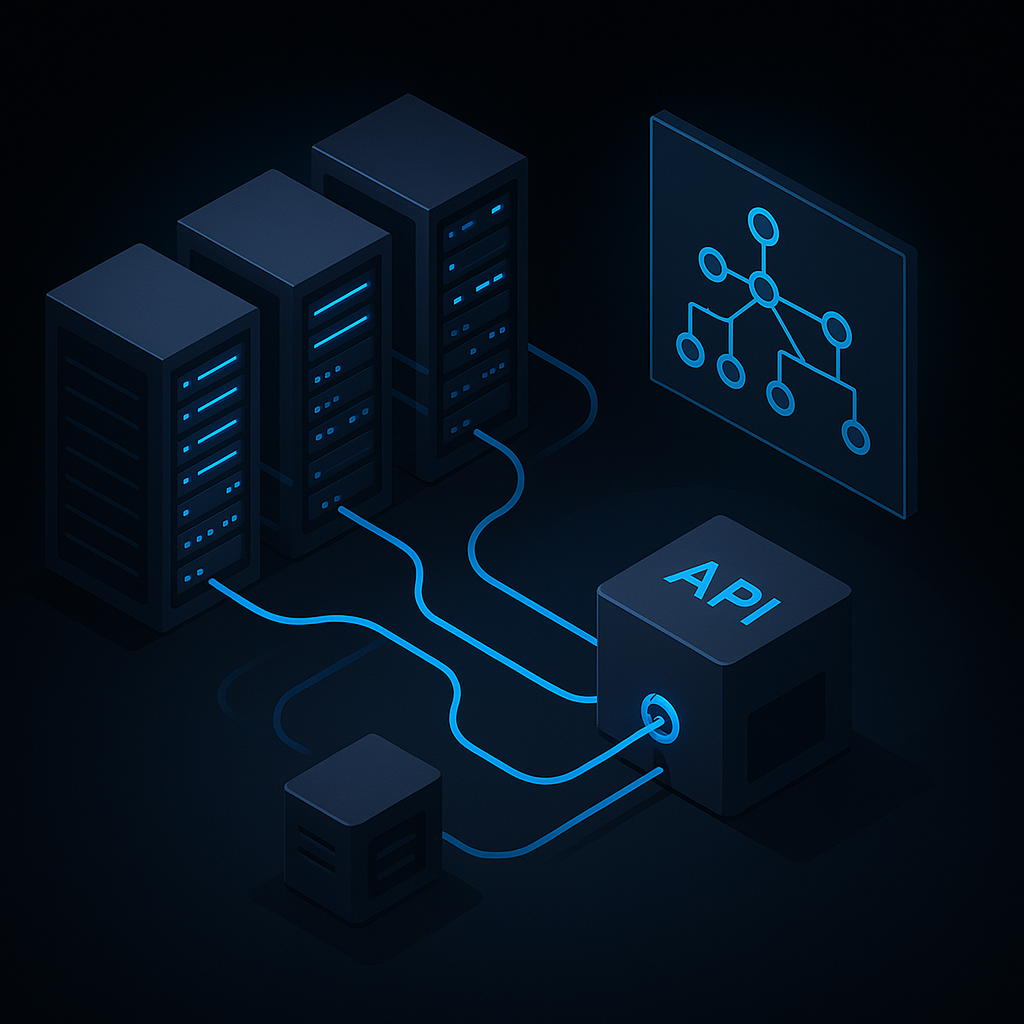
The Model Context Protocol is an open standard introduced by Anthropic in November 2024 that lets AI assistants connect to external tools and data sources through a single, consistent interface. Think of it as USB-C for AI: instead of building a custom integration for every tool you use, the AI client speaks MCP, the tool speaks MCP, and they talk.
An SEO MCP server is just an MCP server that exposes SEO data — keyword rankings, backlinks, audits, GSC queries, AI citations, whatever — to an AI client. The practical effect is that you can ask your assistant “which of our pages dropped more than 5 positions last week and why?” and it will actually go pull the data, not hallucinate an answer.
A few things this unlocks in practice:
- Conversational SEO analysis — ask questions in plain English instead of clicking through a dashboard
- Cross-tool joins — combine GSC impressions with Ahrefs backlinks with Nightwatch rank changes in a single thread
- Automated reporting — schedule a recurring agent task that pulls weekly numbers and writes the narrative for you
- Agentic workflows — let an AI SEO agent actually execute the audits, briefs, and competitor checks you used to do manually
Now to the actual servers.
Nightwatch SEO MCP
If you only connect one SEO MCP to your AI client, this is the one we’d recommend — and yes, full disclosure, we built it. The Nightwatch SEO MCP is an official Model Context Protocol server that exposes your Nightwatch rank tracking, AI visibility, and site audit data to any MCP-compatible AI client. Most other SEO MCPs are point solutions — this one combines the three things SEOs actually do every day in a single connection.
What you can do through the Nightwatch MCP:
- Live Rankings — SERP positions across Google, Bing, and YouTube, queryable by city, language, or device
- AI Visibility — brand surface frequency in Google AI Overviews, ChatGPT, and Perplexity, joinable to your SERP data in the same prompt
- Keyword Research — volume, CPC, intent, and difficulty data for seed terms
- Site Audit — on-page issues, crawl errors, and Core Web Vitals on demand
- Competitor Tracking — share-of-voice and keyword overlap analysis across tracked competitors
- Custom Reports — trigger saved Nightwatch reports and stream results into chat
The agent on the other end can stitch these together. Ask “which keywords dropped this week, and is the drop showing up in our AI Overview citations?” and it executes both queries and joins them in one response — no copy-paste between dashboards.
Setup is roughly 60 seconds: drop the JSON config into your client’s MCP configuration file (e.g. ~/.config/Claude/claude_desktop_config.json), point it at the hosted SSE endpoint (https://mcp.nightwatch.io/sse), and paste a scoped API key. Nightwatch ships both an npx package and the hosted SSE endpoint, so local or remote setups both work.
Supported clients: Claude Desktop, Claude Code, Cursor, Windsurf, ChatGPT, Continue, Cline, and Zed — and any other MCP-compatible client, since the protocol is open.
Best for: SEO teams that need rank tracking and AI visibility and audits without juggling four MCP connections.
Pros
- Genuinely all-in-one — rank tracking, AI visibility, audits, keyword research, competitor data, and reports through one server
- Official, hosted SSE endpoint — no local server to babysit (npx option also available)
- Tested against eight major MCP clients (Claude Desktop/Code, Cursor, Windsurf, ChatGPT, Continue, Cline, Zed)
- Read-only by default, with write-capable scopes available per API key — safer to hand to an autonomous agent
- Included on every paid Nightwatch plan and during the 14-day free trial — no enterprise upsell
- Plays nicely with the Nightwatch SEO AI Agent if you want a hosted UI on top of the same data
Cons
- Rate limits align with your Nightwatch plan’s API quota — heavy agentic loops can chew through it
- AI visibility data, by nature, has more variance than SERP data; you’ll want at least 2–3 weeks of history before drawing conclusions
Pricing: Included on every paid Nightwatch plan (starting at $32/month) and during the 14-day free trial — no separate MCP charge.
Ahrefs MCP
Ahrefs released its official remote MCP in early 2026 and it’s now one of the most capable backlink/competitive servers in the ecosystem. It exposes 95 tools covering Site Explorer, Keywords Explorer, Site Audit, Rank Tracker, and Brand Radar — backed by Ahrefs’ 35-trillion-link index.
The remote endpoint is at https://api.ahrefs.com/mcp/mcp and supports OAuth, so setup in Claude Desktop or Cursor is a one-time auth flow rather than wrangling API keys.
Best for: Backlink analysis, competitor research, and link prospecting at scale.
Pros
- Massive backlink dataset; nothing else in the MCP world comes close on link data
- Official, hosted, OAuth-based — no local setup, no token rotation
- Brand Radar tools surface unlinked brand mentions inside the same MCP
Cons
- Tier-based unit consumption (Lite: 25K units/month, Standard: 150K, Advanced: 500K, Enterprise: 2M+) — easy to burn through credits with an agent that loops
- Read-only — no writeback to Site Audit or Rank Tracker projects
- Lite plan starts at the higher end of SEO tool pricing
Pricing: Tied to your Ahrefs subscription. The MCP itself doesn’t cost extra, but units count against your plan.
Semrush MCP
Semrush’s official MCP is interesting because it’s the only major SEO MCP that’s available both through Anthropic’s Claude and directly inside ChatGPT Plus/Business via the OpenAI MCP integration. So if your team is split between assistants, this is the one that travels with you.
It exposes data from Semrush’s 28.3 billion keyword database across 142 geographic regions. The architecture is a triple-API setup covering core SEO, Trends, and Projects — you can run bulk domain analysis, find low-competition keywords, and trigger keyword clustering all from a prompt.
Best for: Teams already on Semrush who want one MCP that works in both Claude and ChatGPT.
Pros
- Works in Claude and ChatGPT — rare for SEO MCPs
- 142 geographic databases — strong international coverage
- Triple-API access means projects, trends, and core SEO data in one server
- Experimental WebMCP support for browser-based agents
Cons
- Authentication is more involved than Ahrefs (mix of OAuth and API key depending on transport)
- Heavy tools (e.g., bulk domain analysis) can be slow when agents call them in loops
- Tied to a paid Semrush subscription, which isn’t cheap
SE Ranking MCP
SE Ranking went all-in on MCP and it shows — their server exposes 160+ tools, the highest count of any SEO MCP we’ve tested. It’s authenticated remote (OAuth 2.1 with dynamic client registration), and they also ship a set of seven prebuilt Claude Skills that wrap common workflows — content briefs, AI search share-of-voice, audit change logs, backlink gap analysis, and so on.
What makes SE Ranking interesting is the bundled Claude Skills. Instead of having to prompt-engineer your way to a content brief, you can invoke the skill and it composes the right tool calls under the hood.
Best for: Agencies that want broad SEO tool coverage plus ready-made AI workflows.
Pros
- 160+ tools — the broadest official SEO MCP
- Seven Claude Skills shipped out of the box for common deliverables
- Includes AI Search Overview and brand citation monitoring alongside classic SEO
- OAuth 2.1 with dynamic client registration — modern auth setup
Cons
- Tool sprawl can confuse smaller agents; you’ll want to prune which tools are exposed per session
- Like the others, requires an SE Ranking paid plan
DataForSEO MCP
DataForSEO is the data-as-infrastructure SEO API — Ahrefs, Semrush, and dozens of other SaaS products pull from it under the hood. Their MCP server gives you direct access to that raw infrastructure: SERP, Keywords, Backlinks, and On-Page modules across Google, Bing, Yahoo, and Baidu.
You’re paying for what you query, which makes it dramatically cheaper than a SaaS subscription if your agent is making targeted calls instead of broad dashboard sweeps.
Best for: Developers and power users building custom SEO agents who want raw data without a UI premium.
Pros
- Pay-per-query pricing — extremely cost-efficient for targeted automation
- Coverage across Google, Bing, Yahoo, Baidu in one server
- Modular APIs let you connect only the modules you need
Cons
- No UI — you’re orchestrating everything through the AI client
- Setup is more developer-oriented than the SaaS MCPs
- Quality of insights depends entirely on how you prompt the agent
Pricing: Pay-as-you-go API credits, starting at very low per-request costs.
Advanced Web Ranking MCP
AWR’s MCP is laser-focused on rank tracking — 48 specialized tools for ranking gainers and losers, historical position tracking, live SERP fetches, and multi-project comparisons. If your job is to manage a portfolio of client websites and report on ranking deltas, this is the one to plug in.
The MCP is gated behind AWR’s Agency plan or higher, which is steeper than entry-level rank trackers but standard for the segment.
Best for: Agencies managing many client projects who need granular ranking analytics.
Pros
- Best-in-class ranking analytics — gainers/losers, historical highs, live SERP fetch
- Multi-project comparison across a portfolio is a first-class feature
- Secure remote endpoint with OAuth + API key options
Cons
- Agency plan minimum — overkill for solo SEOs
- Rank tracking only — no backlinks, no audits, no AI visibility (you’ll need another MCP for those)
Google Search Console MCP
If you only had budget for zero paid MCPs, this is the one to start with — it’s free, it’s the most accurate keyword data you’ll ever have access to (because it’s your own), and there are now multiple solid implementations.
The two most popular options:
- mcp-gsc by AminForou — open source, 500+ GitHub stars, OAuth and Service Account auth
- suganthan-gsc-mcp — npm-installable, 20 built-in tools, updated April 2026
Either gives any MCP client the ability to pull impressions, clicks, CTR, ranking positions, inspect URLs for indexing issues, and submit sitemaps. You can ask “which queries had over 1,000 impressions last month but a CTR under 2%?” and get the actual list, not a guess.
Best for: Every single SEO. Connect this first.
Pros
- Free, open source, multiple maintained implementations
- Most accurate keyword data on the internet (your own GSC)
- Supports both OAuth (personal) and Service Account (team automation)
Cons
- Setup involves creating Google Cloud credentials — not hard, but more steps than a hosted MCP
- 16-month data limit is a GSC quirk, not the MCP’s fault
- Only works for sites you own and have verified
Google Analytics 4 MCP
Google ships an official GA4 MCP (still labelled experimental as of mid-2026) that connects GA4 properties to LLMs like Claude and Gemini. Pair it with the GSC MCP and you can answer questions like “which landing pages are getting impressions but not converting?” without ever opening a dashboard.
For a more polished experience, Coupler.io’s MCP wraps GA4, GSC, GBP, and 400+ other apps behind a single connection — it syncs every 15 minutes and is generally a better fit if you’re already a Coupler customer.
Best for: Tying SEO performance to actual user behavior and conversions.
Pros
- Official Google implementation, free
- Combines beautifully with the GSC MCP for full-funnel SEO analysis
- Coupler.io alternative adds multi-source joins out of the box
Cons
- Still officially “experimental” — expect some rough edges
- GA4’s data model is famously dense; the AI client will sometimes need very explicit prompts
Screaming Frog MCP
This one’s a milestone: Screaming Frog v24, released in late 2025, is the first major desktop crawler to ship a built-in MCP. The server runs locally on your machine and drives the SEO Spider, so any MCP client can kick off crawls, export data, and manipulate results through natural language.
There’s also a community implementation — bzsasson/screaming-frog-mcp — that’s been around longer and works with older Screaming Frog versions if you haven’t upgraded.
This is the one to add when you want to run technical SEO audits conversationally — “crawl this subdirectory, find pages with broken canonicals, group them by template” is a single prompt instead of an afternoon of clicking.
Best for: Anyone who already lives in Screaming Frog and wants AI-driven crawl orchestration.
Pros
- Officially supported by Screaming Frog as of v24
- Local execution — no data leaves your machine
- Pairs well with Semrush or DataForSEO MCPs for live SERP joins during a crawl
Cons
- Local-only means it can’t run on a server unless you set one up
- Crawls are still bounded by your Screaming Frog license (500 URLs free, unlimited paid)
Serpstat MCP
Serpstat’s MCP is a strong DataForSEO-style competitor with a friendlier price point. It exposes keyword research, backlink summaries, competitor analysis, and audits through natural language. The official JS/TS implementation is on GitHub.
Best for: SMBs and freelancers who want Ahrefs-style data without the Ahrefs price tag.
Pros
- Affordable compared to Ahrefs/Semrush
- Covers the core SEO data points — keywords, backlinks, audits
- Officially maintained, open source
Cons
- Smaller dataset than Ahrefs or Semrush
- Less ecosystem support (fewer prebuilt skills/templates than SE Ranking)
Peec AI MCP
If your team focuses on Generative Engine Optimization (GEO) — getting cited in ChatGPT and Perplexity answers — Peec AI’s MCP is worth a look. It’s a dedicated AI visibility platform with an MCP layer that’s included on all paid plans (no enterprise gate, which is rare in this segment).
At launch the MCP is read-only — your agent can pull citation data and reason over it, but can’t write back yet. Writing capabilities are on the roadmap.
Best for: Teams whose primary KPI is AI citation share, not Google rankings.
Pros
- Included on all paid plans — no enterprise lock
- Solid coverage of 115+ languages
- Actionable recommendations for improving citation rates
Cons
- AI-visibility-only — you’ll still need a separate MCP for rank tracking and audits
- Read-only at launch
- Narrower scope than Nightwatch, which covers both Google SERPs and AI citations in one MCP — see our breakdown of AI rank and brand tracking tools for the wider comparison
Niche MCPs
A handful of smaller MCPs are worth knowing even if they don’t make the everyday rotation:
- Keywords Everywhere MCP — unofficial, open source. Pulls search volume, CPC, and competition data into your AI assistant. Useful as a cheap keyword research add-on.
- AlsoAsked MCP — exposes hierarchical “People Also Ask” question trees. Brilliant for content briefs — ask for the PAA tree for a topic and feed it directly into a brief generator.
- SEOptimer MCP — runs on-demand SEO audits from a chat interface. Lighter than Screaming Frog, faster for one-off checks.
- mcp-seo.com — a public directory and a couple of free aggregator servers worth bookmarking.
- KeywordsPeopleUse MCP — long-tail query discovery, intent classification.
None of these replace a primary MCP, but the AlsoAsked + GSC + Nightwatch combo is honestly one of the strongest content-research workflows you can assemble for the price.
How to Choose the Right SEO MCP Stack
You don’t need all twelve. The sensible stacks look like:
- Solo SEO / freelancer: GSC MCP + Nightwatch MCP + AlsoAsked MCP. Free where possible, paid where it counts.
- In-house SEO team: Nightwatch MCP + GSC MCP + GA4 MCP + Screaming Frog MCP. Covers rankings, AI visibility, owned data, and crawling.
- Agency: Nightwatch MCP (for white-label reporting and 50+ client domains) + Ahrefs or SE Ranking MCP + GSC MCP. The third-party data tool is the swing pick — choose based on what your contracts already pay for.
- GEO/AI-search-focused team: Nightwatch MCP (for Citation Intelligence) + Peec AI MCP + GSC MCP. Don’t skip GSC — Google rankings still drive a huge share of AI citations.
A couple of things to watch for as you assemble your stack:
- Credit consumption — Ahrefs and Semrush both charge in units. An agent that loops can burn through a month’s allowance in an afternoon. Start with strict limits, expand once you’ve watched a few runs.
- Tool sprawl — if your client connects to four MCPs each exposing 50+ tools, the agent’s tool-selection accuracy drops. Prune aggressively per session.
- Auth modes — prefer OAuth-based remote MCPs (Ahrefs, SE Ranking, Nightwatch) over local servers when you can. Less to break.
For a deeper dive on the AI-side of SEO tooling, our roundup of the best AI SEO tools in 2026 covers the dashboards behind several of these MCPs. And if you’re new to the wider topic, the AI SEO primer is the right starting point.
The Bottom Line
The MCP ecosystem went from “experimental” to “production-ready for SEO” in under 18 months. By mid-2026 every major SEO platform either has an official MCP or is racing to ship one, and the open-source community has filled in the rest.
If you only do one thing after reading this: connect the Google Search Console MCP to your AI assistant of choice this afternoon. It’s free, takes 15 minutes, and immediately makes every prompt you send about your own site dramatically more useful.
After that, the Nightwatch SEO MCP is the single biggest force multiplier — rank tracking on Google/Bing/YouTube, AI visibility across Google AI Overviews, ChatGPT, and Perplexity, on-demand site audits, and saved-report streaming, all behind one hosted SSE endpoint. It’s the one paid MCP that does the work of three.
The other ten are excellent additions once you know which workflow you’re optimizing. Start small, watch how your agent actually uses each tool, and add only the MCPs that pay back the credit they consume.
FAQs
What is an SEO MCP server?
An SEO MCP server is a small program that implements the Model Context Protocol — an open standard introduced by Anthropic — to expose SEO data and actions to any MCP-compatible AI assistant. Instead of pasting CSVs or describing tools in prompts, the AI calls the server directly and gets structured data back.
Do I need to be a developer to use SEO MCPs?
No. Most of the big ones (Ahrefs, Semrush, SE Ranking, Nightwatch) are remote MCPs with OAuth — you click “connect” inside Claude Desktop or Cursor, log in, and you’re done. Local MCPs (GSC, Screaming Frog) take a few extra minutes to set up but the maintainers ship step-by-step guides.
Which MCP client should I use?
Most major assistants support MCP in mid-2026 — Claude Desktop and Claude Code, Cursor, Windsurf, Zed, Continue, Cline, and ChatGPT Plus/Business (for a growing list of partners). The Nightwatch MCP is tested against all of these. Pick the assistant you already use and check which MCPs it supports.
Are SEO MCPs safe?
Most reputable MCPs are read-only — they pull data but don’t change anything. Always check what scopes an OAuth flow is asking for, and prefer official MCPs from the SEO vendors themselves over third-party wrappers. For Nightwatch specifically, read-only is the default and write actions are gated.
Can I connect multiple SEO MCPs at once?
Yes, and that’s where it gets powerful. The AI client can call tools from multiple servers in a single response — pulling GSC impressions, joining them to Nightwatch ranking changes, and cross-referencing with Ahrefs backlinks all in one prompt. Just watch tool sprawl: more than 4–5 active MCPs at once tends to degrade the agent’s tool selection accuracy.
How is the Nightwatch MCP different from Ahrefs or Semrush MCPs?
Ahrefs and Semrush MCPs are primarily backlink and keyword research databases with rank tracking bolted on. The Nightwatch MCP is rank-tracking-first — Google/Bing/YouTube SERP data sliced by city, language, and device — with AI visibility in Google AI Overviews, ChatGPT, and Perplexity, site audits, and competitor share-of-voice all exposed through the same server. It’s the only one of the three that surfaces rank changes and AI citation changes side-by-side in a single answer.