
9 Best LLM Tracking Tools for Brand Monitoring in AI Search (2026)
It’s wild to think that just a few years ago, optimizing for Google was the endgame.
Now? You’re optimizing for AI Overviews, ChatGPT, and whatever next-generation model launches tomorrow.
For businesses, this opens up a massive new opportunity — and a genuine challenge.
- How do you know if your content is being picked up by these AI systems?
- Are they referencing your brand accurately?
- How do your mentions in AI-generated answers compare to competitors?
That’s why LLM tracking tools have become essential for any team that cares about search visibility. These platforms help you see how your content performs in the world of AI. They go beyond traditional SEO, giving you insight into how LLMs surface your content, how often your brand is cited, and where you’re losing ground to competitors.
LLM brand monitoring — tracking how your brand is represented inside AI-generated answers — is quickly becoming as important as watching your Google rankings. In this guide we break down the 9 best LLM tracking tools of 2026, what they do, and how they help you stay visible in the AI era.
Quick Takeaways
- LLM tracking tools monitor brand mentions, citations, and sentiment across AI platforms like ChatGPT, Claude, Perplexity, and Google AI Overviews.
- Unlike traditional rank tracking, LLM tracking measures AI Share of Voice, mention rate, and citation frequency rather than numbered positions.
- LLM brand monitoring goes further — it tracks not just whether you appear in AI answers, but how accurately and positively your brand is represented.
- The best tools cover multiple AI platforms simultaneously — single-platform monitoring leaves major blind spots.
- Nightwatch is the only tool on this list that unifies LLM monitoring, classic rank tracking, prompt research, and citation-level sentiment in one platform.
- LLM tracking is no longer optional: AI-generated answers are increasingly the first — and sometimes only — result users see.
- Pricing ranges from free tiers (Knowatoa) to $1,000+/month (Scrunch AI); match the tool to your coverage needs before committing.
Table of Contents
- What Is LLM Brand Monitoring?
- What to Track in LLM Brand Monitoring
- What Are LLM Tracking Tools?
- Why Are LLM Tracking Tools Important?
- How LLM Tracking Differs from Traditional Rank Tracking
- What to Look for in an LLM Tracking Tool
- What are the Best LLM Tracking Tools?
- LLM Tracking Tools Comparison Table
- Frequently Asked Questions
- Choosing the Right LLM Tracking Tool for Your Team
What Is LLM Brand Monitoring?
Traditional brand monitoring tracks where your company is mentioned — in news articles, review sites, forums, and social media. LLM brand monitoring does something different: it tracks whether and how your brand appears inside AI-generated answers from ChatGPT, Claude, Gemini, Perplexity, and Google AI Overviews.
When a user asks ChatGPT “what’s the best rank tracker for agencies?” or “which SEO tools do you recommend?”, your brand either shows up or it doesn’t. LLM brand monitoring gives you the data to know.
The core metrics in LLM brand monitoring are:
- Mention rate — how often your brand surfaces across a defined set of tracked prompts
- AI Share of Voice — your mention rate relative to competitors across the same prompts
- Sentiment — whether AI responses describe your brand positively, neutrally, or negatively
- Factual accuracy — whether AI statements about your brand, pricing, or features are correct
- Citation rate — how often AI responses link or attribute content back to your specific pages
Why does this matter? AI search is increasingly the first touchpoint in the buyer journey. If a prospective customer asks an AI assistant for tool recommendations and your brand is missing from the answer, you’re invisible to that searcher — even if you rank on page one of Google. LLM brand monitoring closes that visibility gap.
For a deeper look at the overlap between AI visibility and traditional SEO, see our guide on AI rank and brand tracking tools.
What to Track in LLM Brand Monitoring
Effective LLM brand monitoring requires tracking more than a simple yes/no for whether your brand was mentioned. Here are the six signal types that give you an actionable picture:
Brand mentions (direct and paraphrased). Some AI responses name your brand directly; others paraphrase features or describe your product category in a way that omits the brand name entirely. Robust tracking catches both.
Competitor mention frequency vs. your brand. AI Share of Voice only becomes meaningful when you compare it to rivals. If ChatGPT recommends a competitor three times as often as your brand for a high-intent query, you have a concrete gap to close.
Sentiment (positive, neutral, or negative framing). An AI that mentions your brand but calls it “expensive” or “complicated” is doing damage. Sentiment tracking surfaces how AI models frame your brand before that framing influences real purchase decisions.
Factual accuracy of AI statements about your brand. LLMs can hallucinate or repeat outdated information — wrong pricing, discontinued features, or inaccurate comparisons. Monitoring accuracy lets you update source content before the misinformation spreads.
Which prompts trigger your brand to appear. Understanding the specific questions that surface your brand reveals where you have AI authority — and where you’re absent from conversations you should own.
Citation and source attribution rate. When an AI does mention your brand, does it link to your pages? Citation rate reflects how much AI models trust your content as a primary source, which in turn influences how often you’re recommended.
What Are LLM Tracking Tools?
LLM tracking tools are platforms designed to help you monitor how your content, keywords, brand, and competitors appear in AI-generated responses from tools like ChatGPT, Claude, Google AI Overviews, Perplexity, and Gemini.
Think of them as the Google Search Console for the AI world.
Instead of tracking your position in blue links on a traditional SERP, they answer questions like:
- Is ChatGPT recommending my product when someone asks for “best CRMs for startups”?
- Does Claude cite my blog post when summarizing “how to write an effective cold email”?
- Is Google Gemini pulling answers from my site or my competitors?
- What is my AI Share of Voice compared to rivals across all major models?
Some tools go deeper still, offering sentiment analysis, prompt-based tracking, and source attribution — so you don’t just know if you’re being mentioned, but also how and why.
For a detailed breakdown of what these metrics look like in practice, see our guide on how to measure LLM visibility. For the platform that connects those citations back to the SERP rankings driving them, see how Citation Intelligence works in Nightwatch.
Why Are LLM Tracking Tools Important?
In short: because LLMs are now gatekeepers to your content.
AI models are embedded in search engines, chatbots, voice assistants, and customer support tools. But unlike traditional search, LLMs don’t always link back to your site — they summarize, rephrase, and sometimes paraphrase your content without attribution. You could be driving someone else’s brand awareness without ever knowing it.
LLM tracking tools solve this by giving you visibility into:
- How LLMs talk about your brand. If an LLM gives a wrong or outdated answer about your company, you need to catch and correct it quickly.
- Which prompts or keywords trigger mentions. Understanding the queries that surface your brand lets you optimize content for AI retrieval.
- Whether you’re being cited as a source. Citation tracking tells you which pages LLMs trust enough to reference.
- Your AI Share of Voice. How often your brand appears in AI answers relative to competitors is the new market share metric for AI rank and brand tracking.
If your business depends on search visibility, brand trust, or content marketing, these tools are no longer optional. You can learn more about the underlying mechanics in our guide to LLM rankings.
How LLM Tracking Differs from Traditional Rank Tracking
Traditional SEO rank tracking and LLM tracking both help you understand search visibility — but they measure fundamentally different things. Here’s how they compare across seven key dimensions:
| Dimension | Traditional Rank Tracking | LLM Tracking |
|---|---|---|
| What is tracked | Numbered position (1, 2, 3…) on a SERP | Mention rate, citation frequency, AI Share of Voice |
| Primary signal | URL appearing in blue-link results | Brand or content referenced in an AI-generated answer |
| Platform scope | Google, Bing, Yahoo | ChatGPT, Perplexity, Claude, Gemini, AI Overviews |
| Output format | Position number with daily delta | Presence/absence, sentiment score, source attribution |
| Link attribution | Click-through URL is tracked | Citation may or may not include a link |
| Optimization lever | On-page SEO, backlinks, technical health | Content authority, structured data, prompt alignment |
| Competitive metric | Share of clicks / visibility score | AI Share of Voice across targeted prompts |
The takeaway: traditional rank tracking tells you where you appear in a list. LLM tracking tells you whether you exist in AI-generated knowledge — which is increasingly where users get their answers first.
For teams building a full picture, the best approach is to use both. Tools like Nightwatch now cover both dimensions in a single platform.
What to Look for in an LLM Tracking Tool
Choosing the right LLM tracking tool depends on your team’s goals, budget, and tech stack. Here are six capabilities worth evaluating closely.
Platform Coverage
The AI ecosystem is fragmented. Users move between ChatGPT, Gemini, Claude, Perplexity, and Google AI Overviews interchangeably — often in the same day. A tool that only monitors one or two platforms leaves significant blind spots.
Look for tools that cover all major models plus Google AI Overviews, and check whether they also track the underlying web searches that AI systems perform to retrieve real-time data. That secondary layer of coverage is what separates generative engine optimization from surface-level brand monitoring.
Query Customisation
Prompts are the new keywords. A strong LLM tracking tool should let you define the specific queries, prompts, and questions you want to monitor — not just generic brand name searches.
Custom prompt libraries let you track bottom-of-funnel questions like “what is the best rank tracker for agencies?” alongside broad awareness queries. The more granular your prompt coverage, the more actionable your data.
Sentiment Analysis
Knowing that your brand appeared in an AI answer is only half the picture. Was the mention positive, neutral, or negative? Did the AI describe your product accurately?
Citation-level sentiment analysis flags when LLMs misrepresent your brand or use outdated information, so you can update source content before it influences purchase decisions. This feature is notably absent from several tools on this list — check before you buy.
Historical Data
Trend visibility matters. A snapshot of today’s AI mentions is useful; a 12-month trend showing how your AI Share of Voice has grown (or shrunk) is actionable.
Look for tools that store historical query results so you can identify which content updates improved your mention rate, and demonstrate progress to stakeholders over time.
Team Collaboration
LLM tracking is no longer just an SEO concern — it touches brand, content, PR, and even product teams. Evaluate whether a tool supports multiple users, role-based access, shared dashboards, and white-label reporting for client-facing work.
API Access
For agencies running AI SEO at scale or teams that want to pipe LLM data into their own BI tools, API access is essential. Not all tools offer it, and those that do often restrict it to higher-tier plans.
What are the Best LLM Tracking Tools?
- Nightwatch
- Rankscale AI
- Scrunch AI
- Peec AI
- Profound AI
- Keyword.com
- Otterly AI
- Knowatoa AI
- SEOpital
Nightwatch
You probably know Nightwatch as a powerful SEO rank tracking tool — and it now anchors AI monitoring, too.
Nightwatch is the most complete LLM tracking platform on this list because it combines AI search visibility with traditional rank tracking in one place. Rather than switching between a rank tracker for Google and a separate tool for ChatGPT, teams get a unified dashboard that covers both dimensions simultaneously.
For LLM brand monitoring specifically, Nightwatch tracks how your brand is represented across every major AI model — not just whether you appear, but whether the AI’s statements about your brand are accurate, positive, and complete. This makes it one of the few tools that closes the loop between AI presence and brand reputation management.
AI Share of Voice is Nightwatch’s headline AI metric. It shows what percentage of tracked prompts return a mention of your brand across all monitored LLMs, giving you a single number that benchmarks your AI presence against competitors over time.
Mention rate tracks how frequently your brand or content appears across all AI-generated responses for your configured prompt set — the raw signal beneath Share of Voice.
Citation tracking identifies which specific pages on your site are being referenced by AI systems, so you can double down on content that earns citations and fix pages that don’t.
Sentiment analysis is powered by the Nightwatch SEO Agent, which evaluates the tone and accuracy of each AI mention at the citation level. If ChatGPT is describing your pricing incorrectly or Claude is citing a competitor where you should appear, you’ll see it flagged in your dashboard.
Multi-platform coverage spans ChatGPT (4o-mini), Claude (3.5 Haiku), Google AI Overviews, Perplexity, and Gemini — with additional model support being added as the AI landscape evolves.
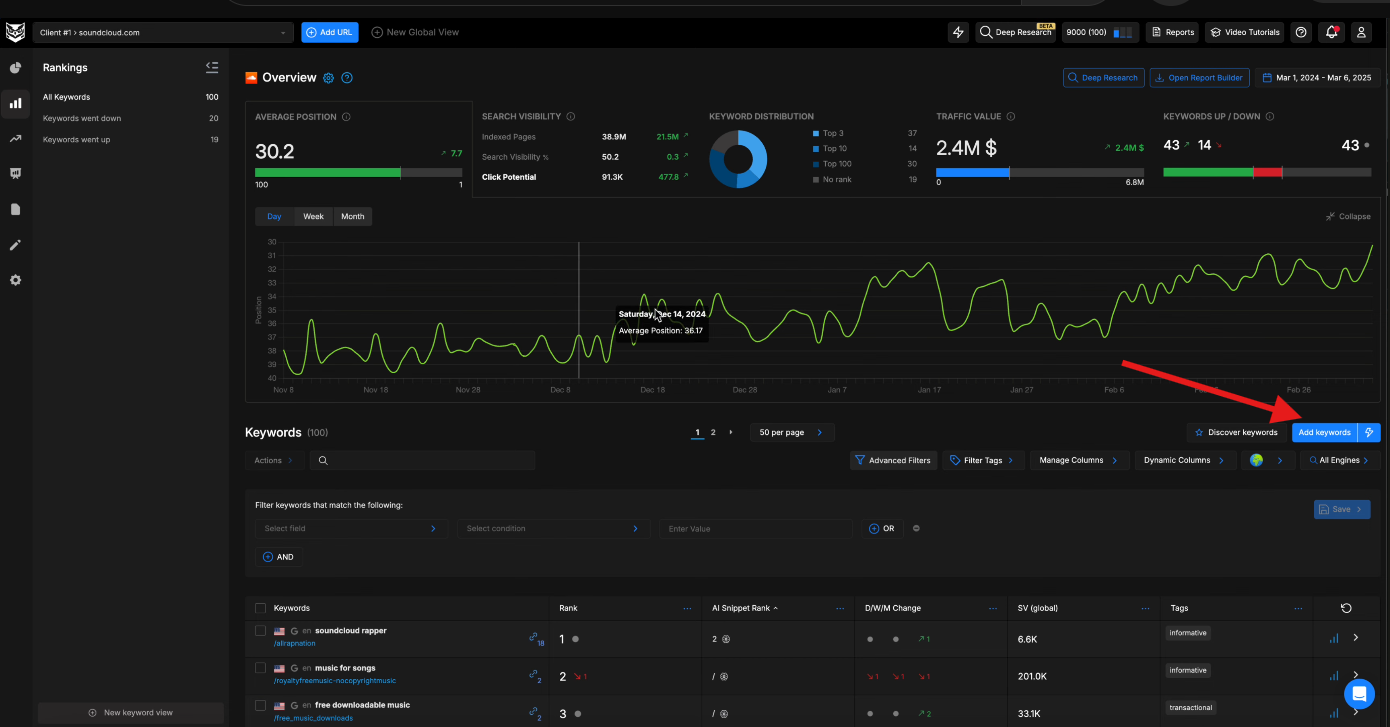
Simply navigate to your dashboard and click “Add New Keywords.”
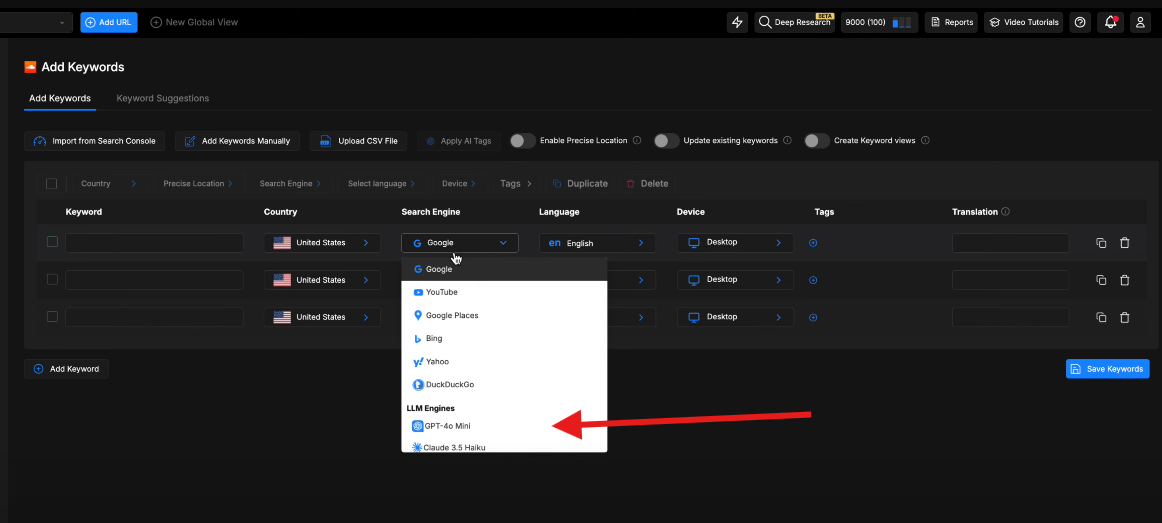
Type in the keywords or prompt you want to track, then in the “search engine” tab choose an LLM from the drop-down menu and select “Save.”
Filter your dashboard to reveal rankings from LLMs only, and you’ll instantly see how your brand is mentioned for these prompts.
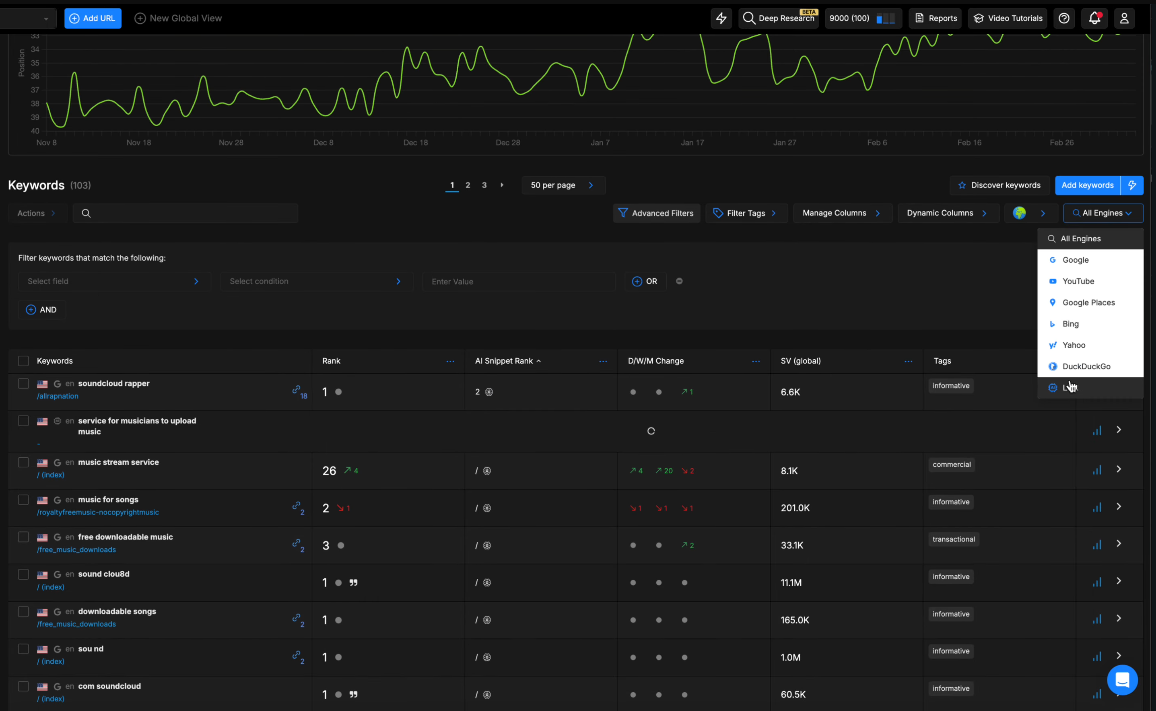
You can track how often your content appears in AI-generated responses and compare your brand to competitors through easy-to-read graphs.
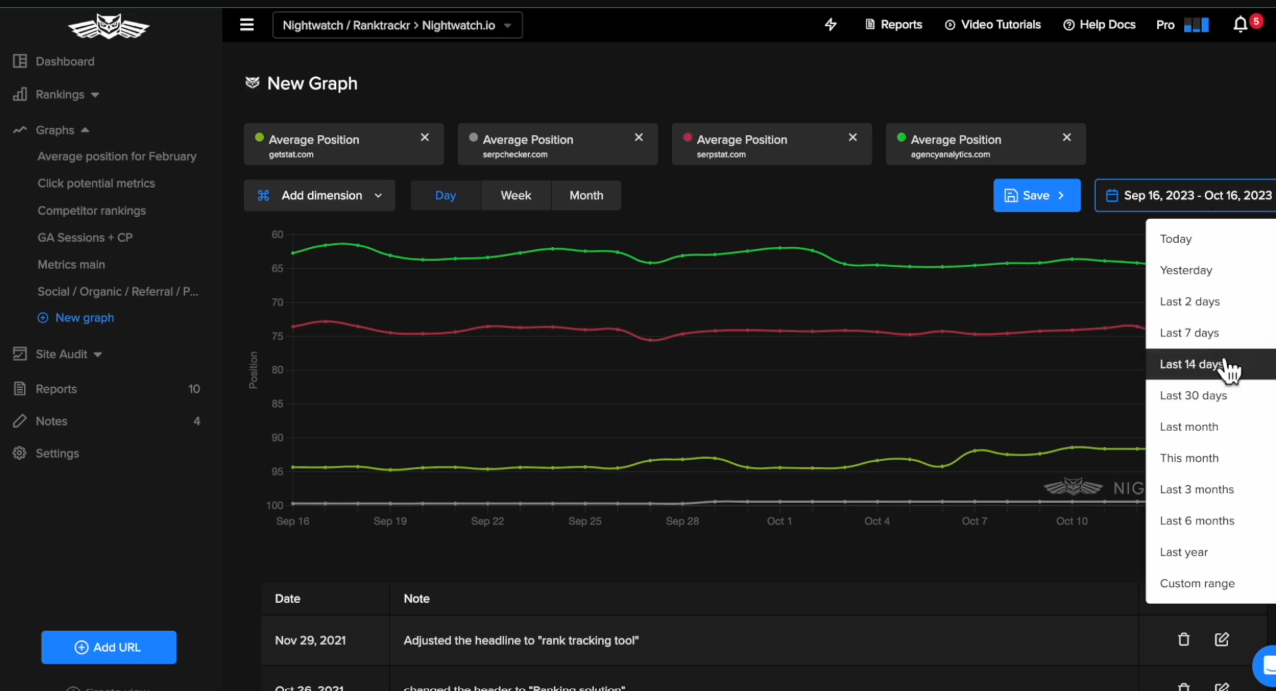
With its strong SEO foundations and a user-friendly interface, Nightwatch is an excellent choice for teams that want a single platform for both LLM tracking and classic rank tracking.
Best For: SEO professionals and marketing teams who want a single platform covering LLM brand monitoring, AI Share of Voice, citation tracking, citation-level sentiment, prompt research, and classic keyword rankings.
Pros
- 14-day free trial, no credit card required.
- Tracks AI Share of Voice, mention rate, and citation frequency alongside traditional keyword positions.
- Citation-level sentiment analysis powered by the Nightwatch SEO Agent.
- Multi-platform coverage: ChatGPT, Claude, Google AI Overviews, Perplexity, Gemini.
- Filter views to focus on AI-only data, including local AI results.
- Integrates with Google tools and Looker Studio.
- Daily updates, custom performance metrics, and exportable white-label reports.
- Conduct thorough site audits alongside AI monitoring.
Cons
- LLM metrics are newer features and differ from traditional SEO KPIs — some learning required.
- Model support continues to expand; check the latest list of covered LLMs in the dashboard.
Pricing
Nightwatch offers flexible plans based on keyword count and number of websites tracked.
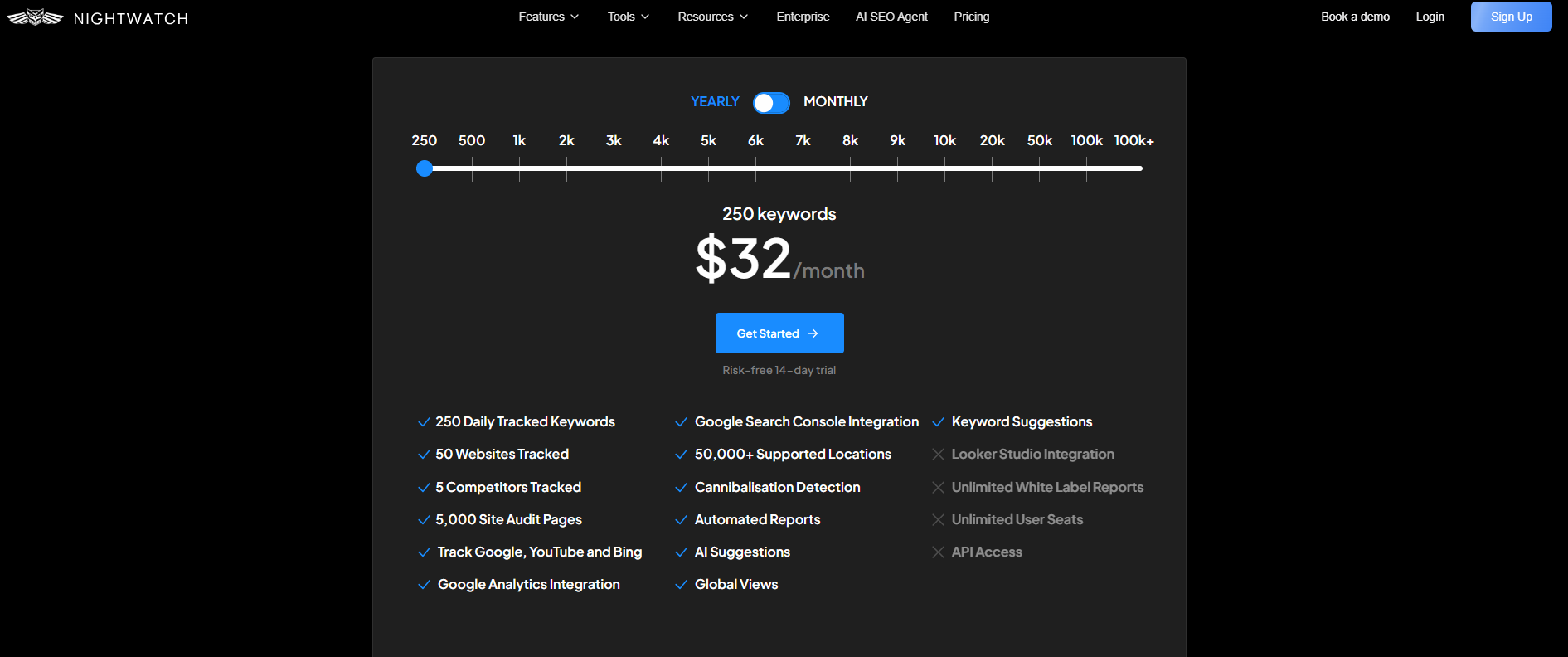
- $32/month: 250 daily tracked keywords, 50 tracked websites, five competitor domains, 5,000 web page audits, keyword suggestions, and more.
- $82/month: 1,000 daily tracked keywords, 200 tracked domains, five competitors, 10,000 site audit pages, unlimited users, and more.
- $559/month: 10,000 daily tracked keywords, 1,000 tracked websites, five competitors, 50,000 site audits, unlimited users, and more.
- Request quote: 20k to 100k+ keywords tracked, 1,000 tracked websites, unlimited users, and more.
Peec AI
Based in Berlin, Peec AI focuses on how brands are represented across AI platforms like ChatGPT, Perplexity, and AI Overviews. It centres on LLM visibility and sentiment but does not monitor the search engines AI systems query for real-time answers.
Because Peec AI omits search engine tracking, prompt research, and citation-level sentiment analysis, teams may still need other tools to understand how prompts surface competitors or how sources are referenced. Pricing also leans high relative to the narrower coverage.
Best For: Marketing teams that want basic LLM visibility tracking and are comfortable supplementing it with separate search and prompt research tools.
Pros
- Tracks how your brand shows up in AI search results.
- Covers top AI platforms like Gemini and Perplexity.
- Monitors brand mentions and tone.
Cons
- No search engine tracking for Google, Bing, or other sources AI systems use.
- No prompt research or citation-level sentiment analysis.
- No free plan or trial, and pricing can feel high for the limited feature set.
- New to the market, with features and integrations still maturing.
Pricing
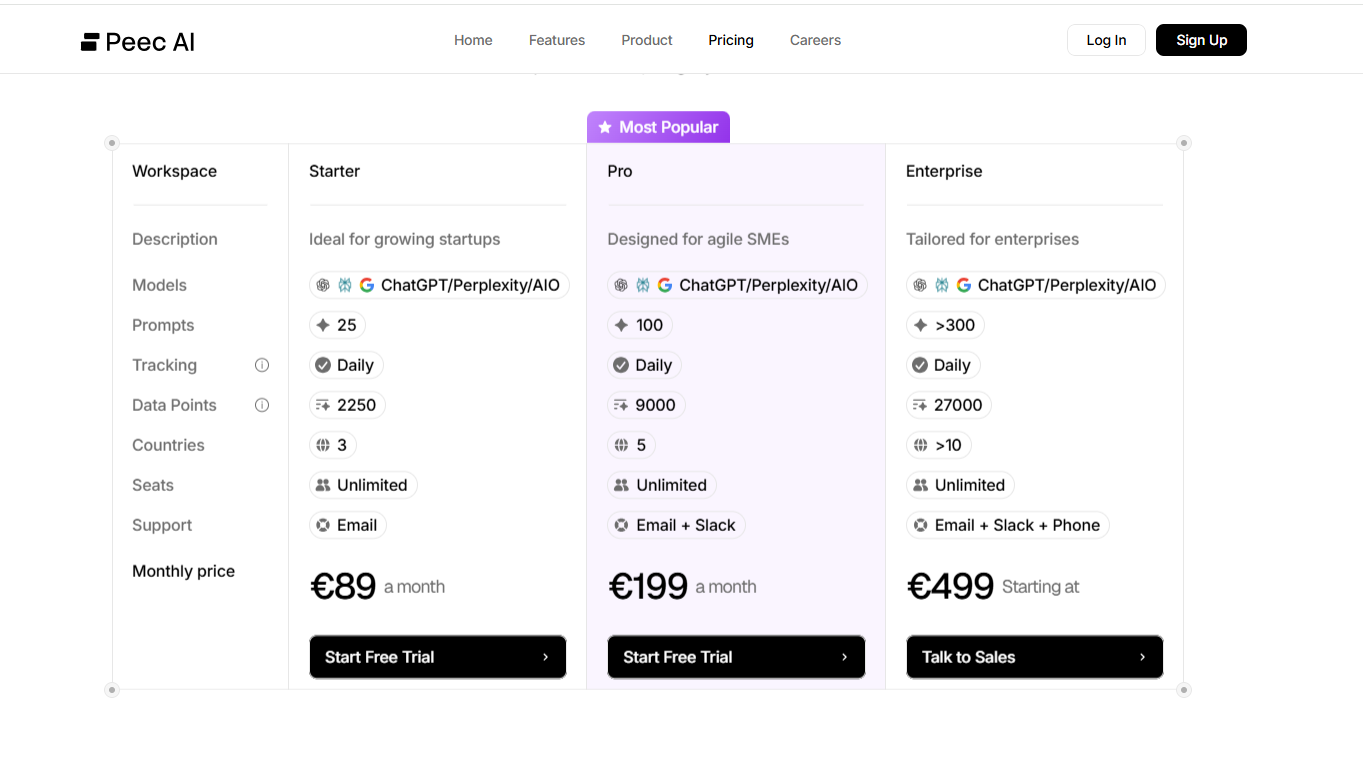
- Starter: €89/month, 25 prompts, three countries, daily tracking.
- Pro: €199/month, 100 prompts, five countries, daily tracking.
- Enterprise: €499/month, 300+ prompts, 10+ countries, daily monitoring.
Profound
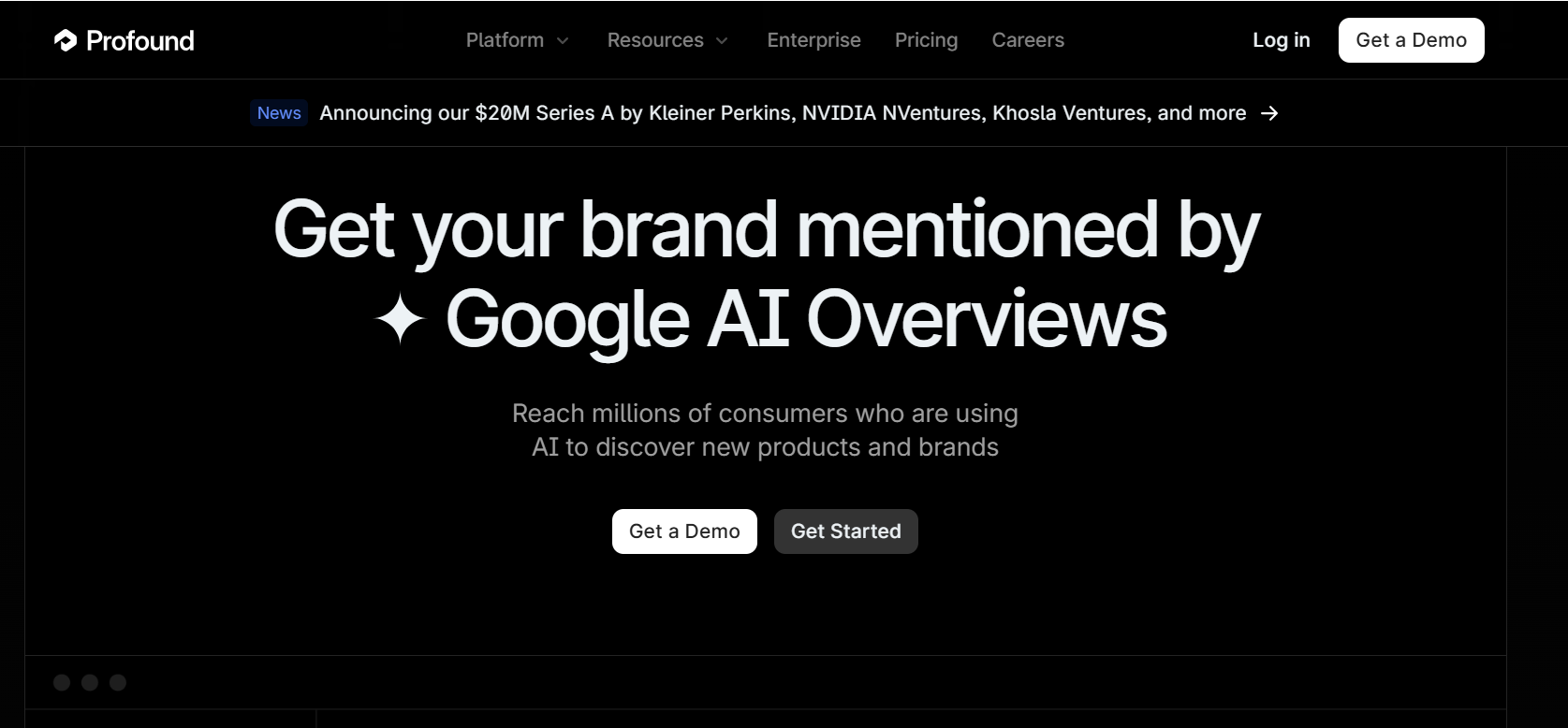
Profound AI is positioned for large organisations and focuses on LLM tracking across ChatGPT, Claude, Gemini, and Google AI Overviews. It highlights mentions and tone but does not cover the search engines AI systems query for live data.
Because Profound AI omits search engine tracking, prompt research, and citation-level sentiment analysis, teams looking for a complete view of AI and search visibility will need additional tools. Its enterprise pricing also runs higher than many options that include broader monitoring.
Best For: Enterprises and marketing teams that need deep insight into how their brand is referenced, ranked, and perceived across AI-powered search experiences.
Pros
- Tracks brand mentions across ChatGPT, Claude, Gemini, Perplexity, Grok, and Google AI Overviews.
- Detects changes in brand tone within AI-generated responses.
- Identifies the top sources referenced by AI models when mentioning your brand.
Cons
- No search engine tracking for Google, Bing, or other sources AI models use.
- No prompt research or citation-level sentiment analysis.
- No free plan or trial, with pricing starting high for limited coverage.
- Feature set is focused on LLM visibility, so smaller teams may find it excessive without a full monitoring view.
Pricing
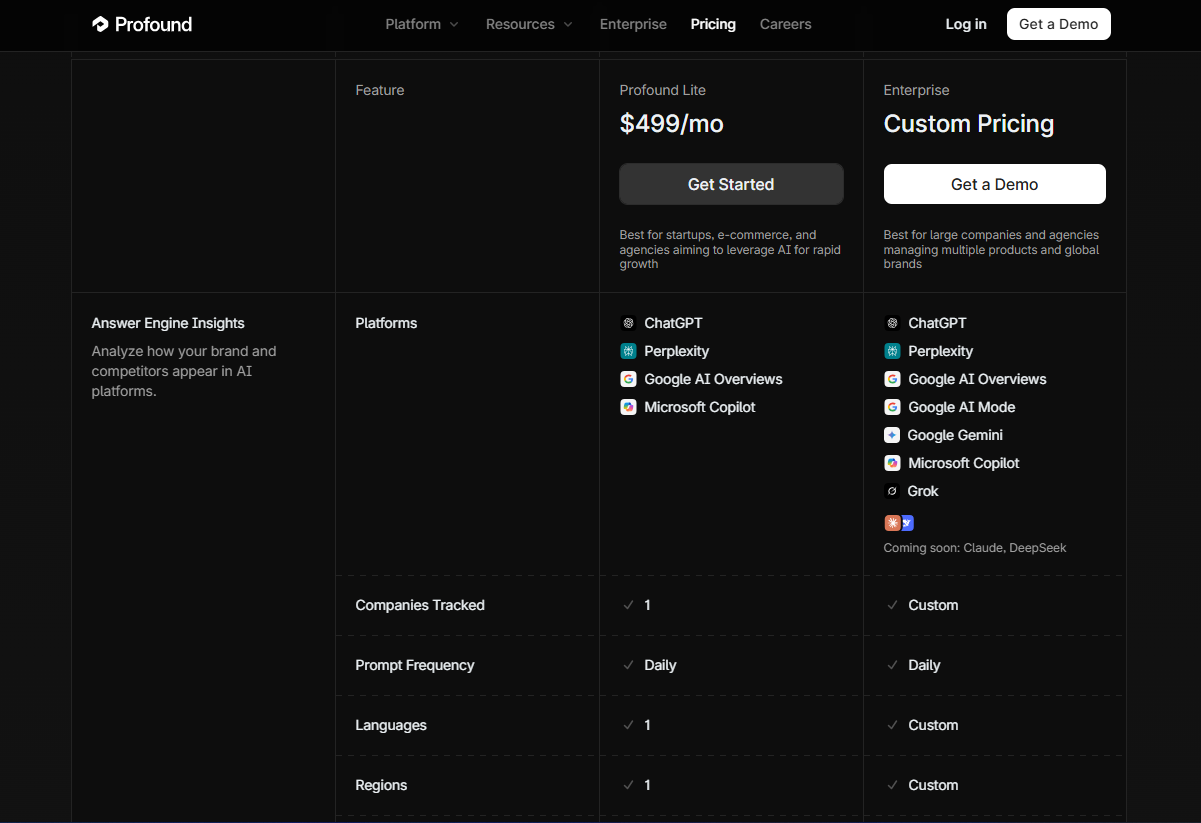
- Profound Lite: $499/month, one company tracked, daily tracking.
- Profound AI also uses custom pricing for enterprise clients. Costs vary based on the number of brands monitored, AI platforms tracked, data update frequency, and integration needs.
Rankscale AI
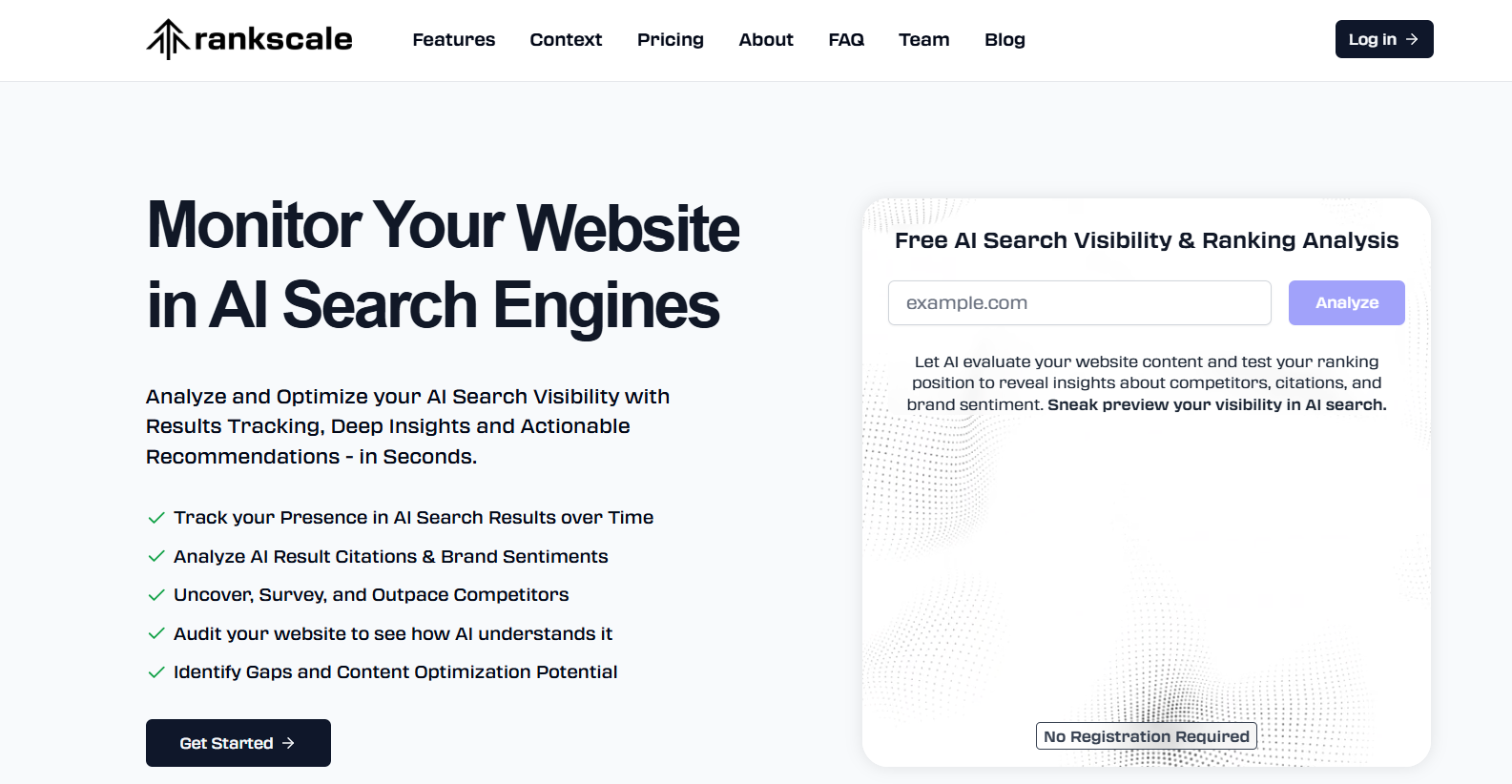
Rankscale AI bridges traditional SEO and AI-powered search. Since tools like ChatGPT, Claude, and Gemini are changing how people find and trust content, Rankscale ensures your brand doesn’t just show up — it shows up well.
Rankscale conducts AI-focused site audits to identify content or technical issues that may be impacting your visibility. It checks sentiment, so you can see not just where you’re mentioned but how you’re being discussed. And with competitive benchmarking, you gain a comprehensive view of your standing in AI-driven search.
Best For: SEO and marketing teams seeking AI-specific optimisation insights alongside traditional search visibility.
Pros
- Free trial available.
- Tracks visibility across AI-generated answers, not just classic search results.
- AI site audits that go beyond standard keyword suggestions.
- Credit-based pricing adapts to different business needs and campaign sizes.
- Helps teams fine-tune perception and positioning in AI search spaces.
Cons
- No sentiment analysis in cheaper plans.
- Credit-based pricing can become limiting for continuous monitoring.
Pricing
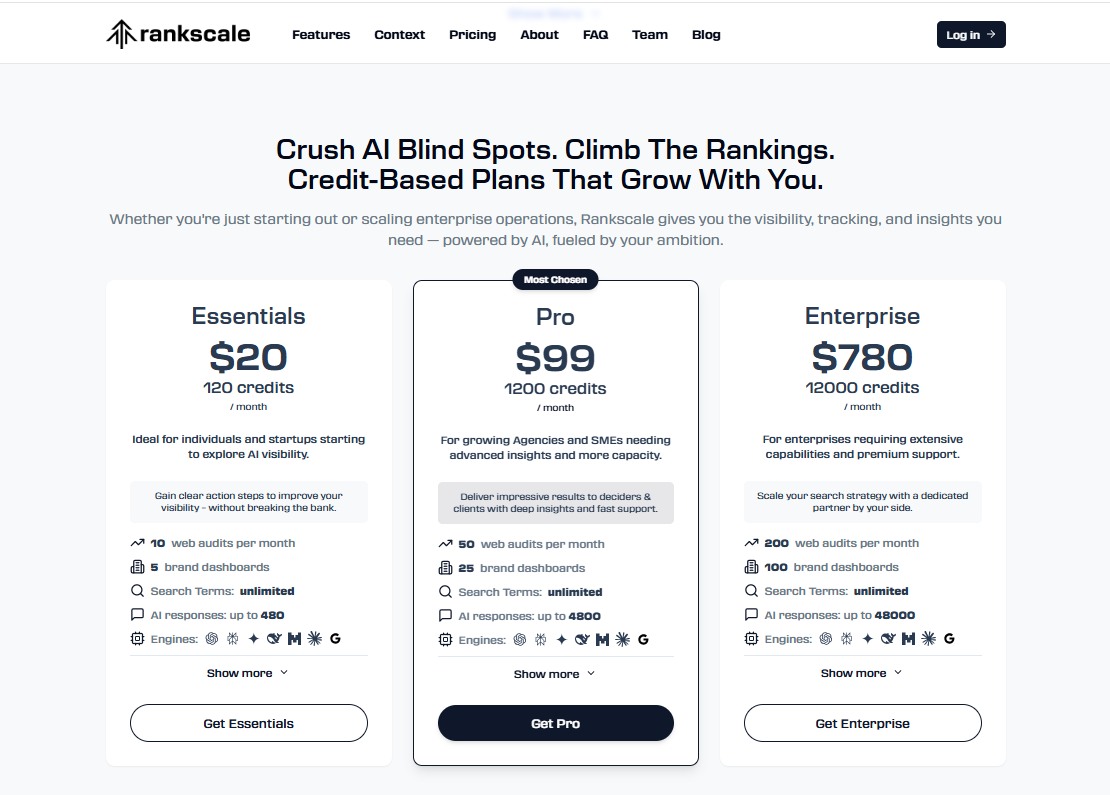
- Essentials: $20/month, 120 credits/month, 10 web audits/month, five sites tracked, no sentiment analysis.
- Pro: $99/month, 1,200 credits/month, 50 web audits/month, 25 brand dashboards, email and Slack support.
Scrunch AI
Scrunch AI steps into the LLM tracking game with a clear mission: closing the gap between how AI sees your brand and how you want to be seen.
Instead of flooding you with generic data, Scrunch digs deep into how AI models interpret, cite, and rank your brand. It tracks mentions and sentiment, and checks whether AI responses align with your actual content using a feature called the “knowledge hub.” If there’s outdated information or AI is pulling from the wrong sources, you’ll know.
Scrunch also provides journey maps that illustrate how AI search engines guide users through discovery stages — all based on how your brand appears.
Best For: Marketing teams and brand strategists seeking real-time insights into how their brand is represented across AI-generated search results.
Pros
- Explicitly designed for AI-powered brand monitoring.
- Persona-based journey mapping helps visualise how AI engines frame your brand to different user types.
- The Knowledge Hub highlights AI inaccuracies, helping brands correct misinformation.
- Competitive insights that reveal gaps in AI brand positioning.
- Real-time visibility into multiple LLMs, including Google AI Overviews.
Cons
- No free plan or trial.
- Can become quite expensive for smaller teams.
- Limited prompt tracking features for the price point.
Pricing
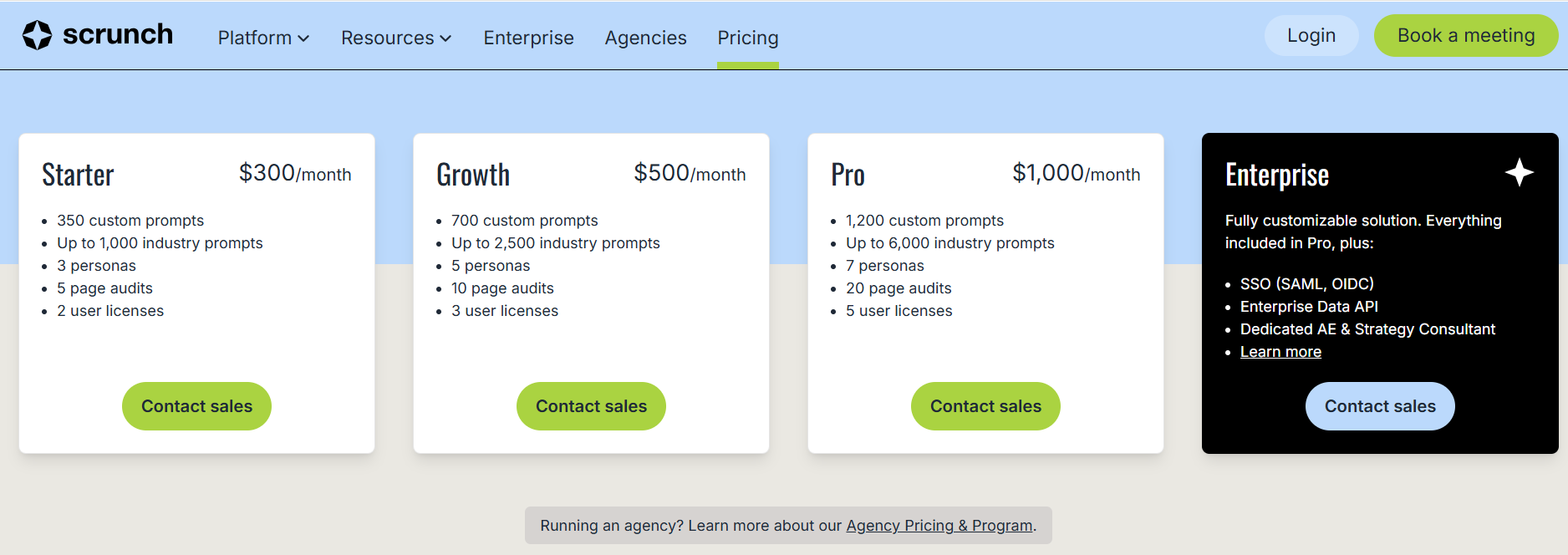
- Starter: $300/month, 350 custom prompts, up to 1,000 industry prompts, three personas, 5 page audits, two user licences.
- Growth: $500/month, 700 custom prompts, up to 2,500 industry prompts, five personas, 10 page audits, three user licences.
- Pro: $1,000/month, 1,200 custom prompts, up to 6,000 industry prompts, seven personas, 20 page audits, five user licences.
- Prospective users must contact the Scrunch team to book a demo.
Keyword.com
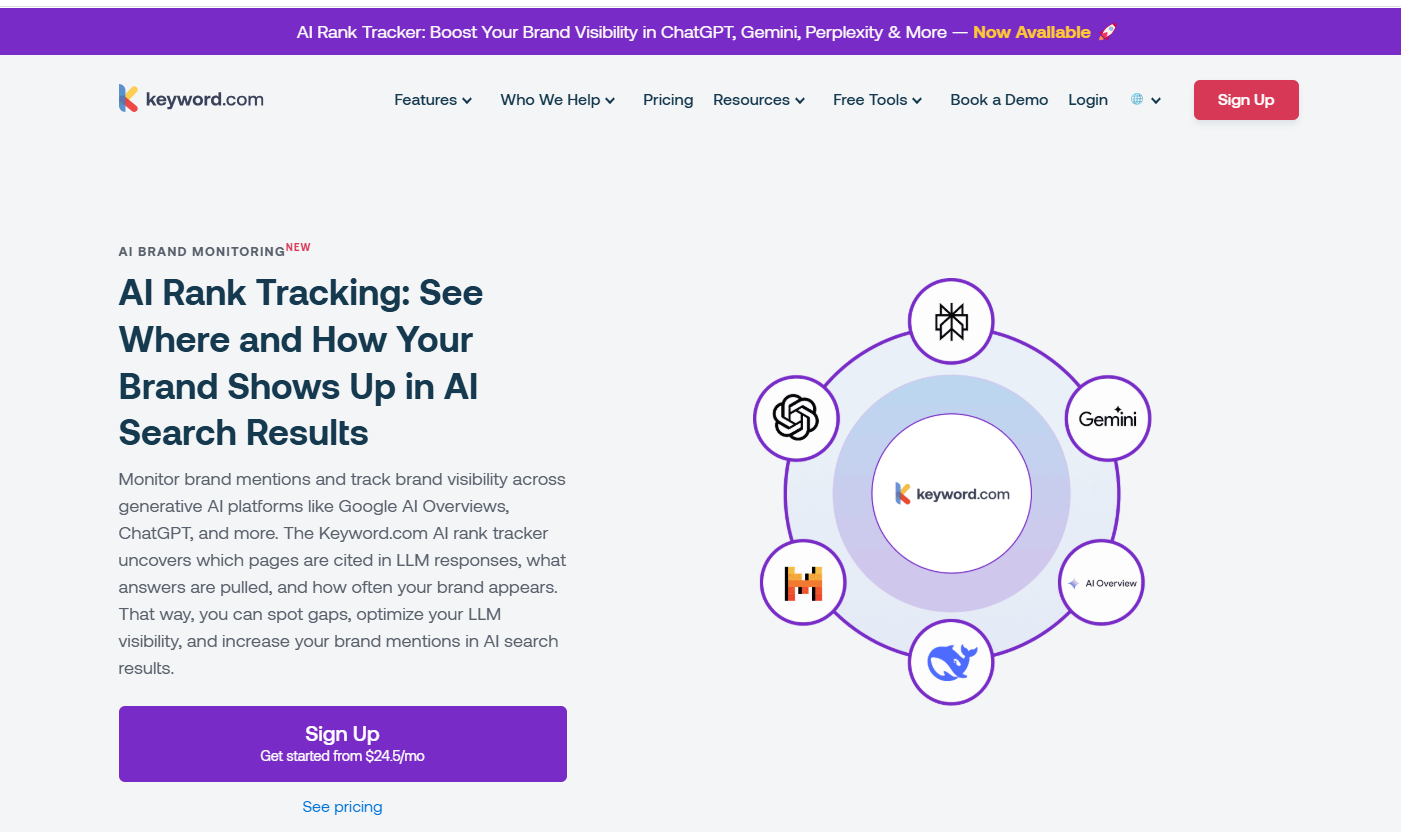
Keyword.com, once known as Serpbook, has evolved far beyond a traditional SERP tracker. While it’s still strong at tracking keyword rankings on Google and Bing, the standout in 2026 is its LLM tracking suite.
It’s designed to show you how your brand and content are being cited (or ignored) across generative search engines like ChatGPT, Claude, Gemini, and Google AI Overviews. Unlike newer tools built solely for AI monitoring, Keyword.com bridges the gap between organic search and AI visibility.
You can monitor keyword triggers that surface your content in ChatGPT, track sentiment in AI-generated answers, and see which URLs are being cited — down to the LLM and prompt level.
Pros
- 14-day free trial available.
- Tracks how and where ChatGPT, Gemini, Claude, Perplexity, and others reference your brand.
- Identifies which keywords and prompts trigger AI mentions and citations.
- Monitors how AI platforms portray your brand, positively and negatively.
- Google AI Overviews monitoring included.
- Supports precise local and mobile SERP tracking, ideal for brands with local SEO priorities.
- Customisable branded dashboards and automated reporting.
Cons
- Pricing for advanced generative tracking is customised and requires outreach to the sales team.
- May show different search volumes than tools like Google Keyword Planner.
- Can feel overwhelming for small businesses or solo SEOs new to AI/SEO crossover.
Pricing
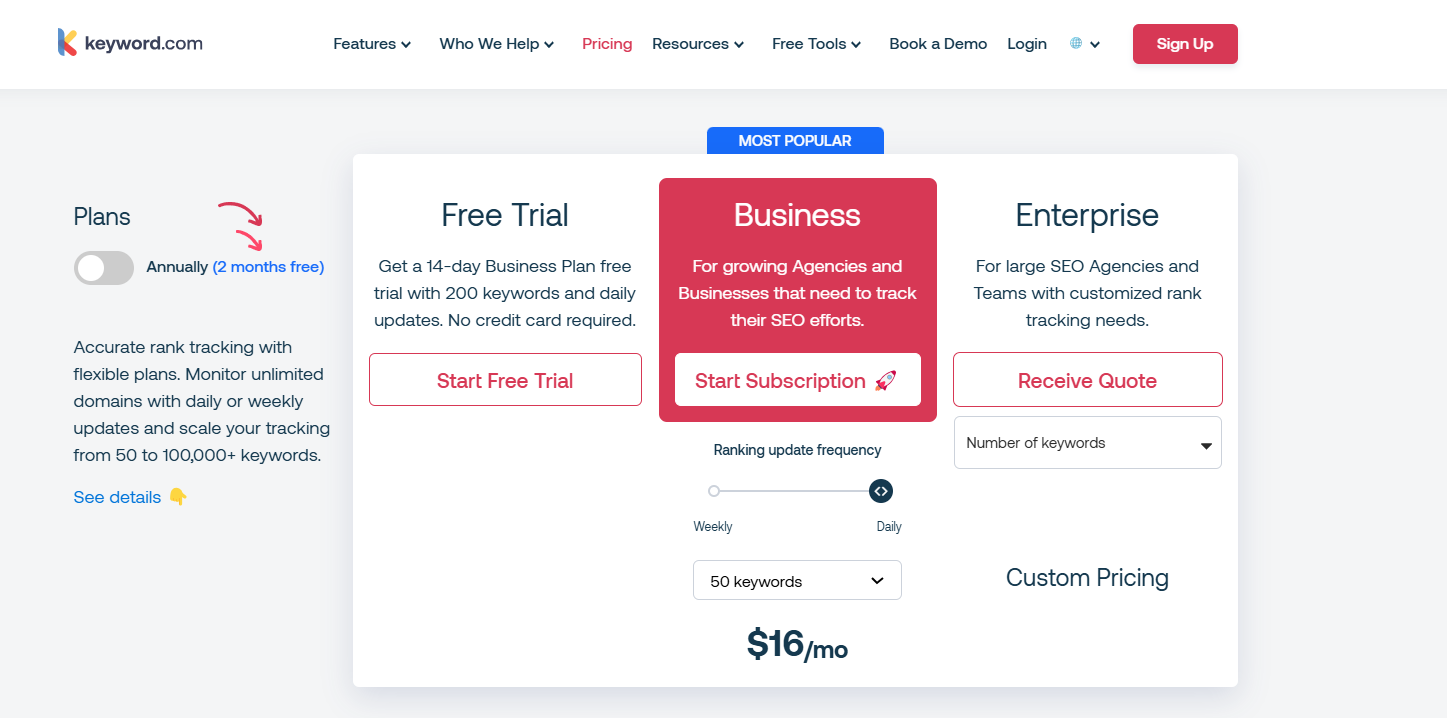
- Business: $16/month, 50 keywords tracked, daily tracking, SERP tracking, AI tracking.
- Enterprise: Contact sales for a custom quote.
Otterly AI
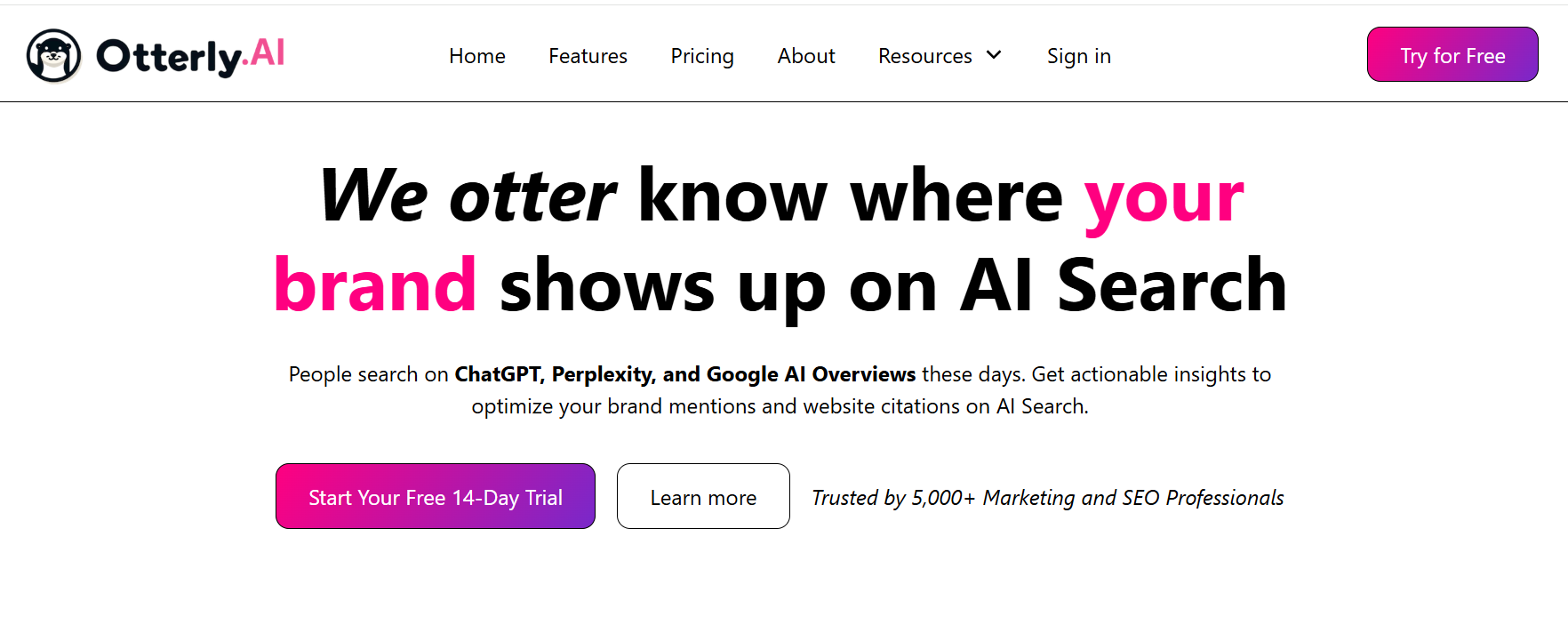
Otterly AI tracks how AI search engines like ChatGPT, Perplexity, and AI Overviews talk about your brand, link to your content, or rank your pages in their responses.
It checks if your links are being cited, the tone the AI uses when mentioning you, and how visible your content is across different platforms and locations. It’s one of the few tools explicitly designed for this purpose, making it useful for marketing teams trying to stay visible in a world where people ask AI instead of Google.
Best For: Marketers, SEO teams, and brand managers who want to know exactly how their content and brand show up in AI-generated answers.
Pros
- 14-day free trial.
- One of the first platforms designed to monitor how brands appear in AI-generated answers.
- Tracks visibility on ChatGPT, Perplexity, and AI Overviews; shows which pages are getting cited and why.
- Clean dashboards and automated reports — friendly for non-technical users.
- Combines brand reputation insights with keyword-level tracking.
- Helpful for targeting different regions or markets.
Cons
- Setup and configuration can be overwhelming initially.
- No public documentation for advanced features.
- Because AI tools personalise answers, results may not always match what a real user sees.
Pricing
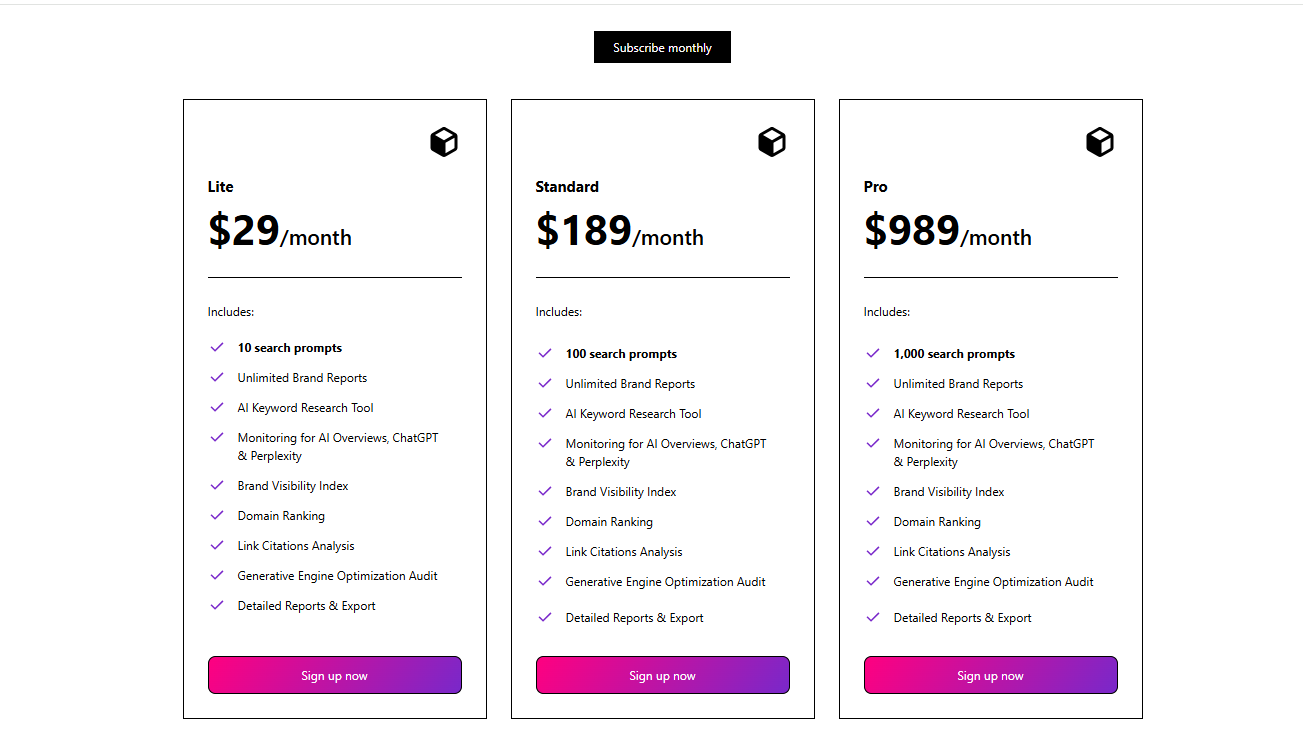
- Lite: $29/month, basic tracking and 10 search prompts per month.
- Standard: $189/month, 100 search prompts, tracks ChatGPT, Perplexity, and AI Overviews.
- Pro: $989/month, 1,000 search prompts.
Knowatoa AI
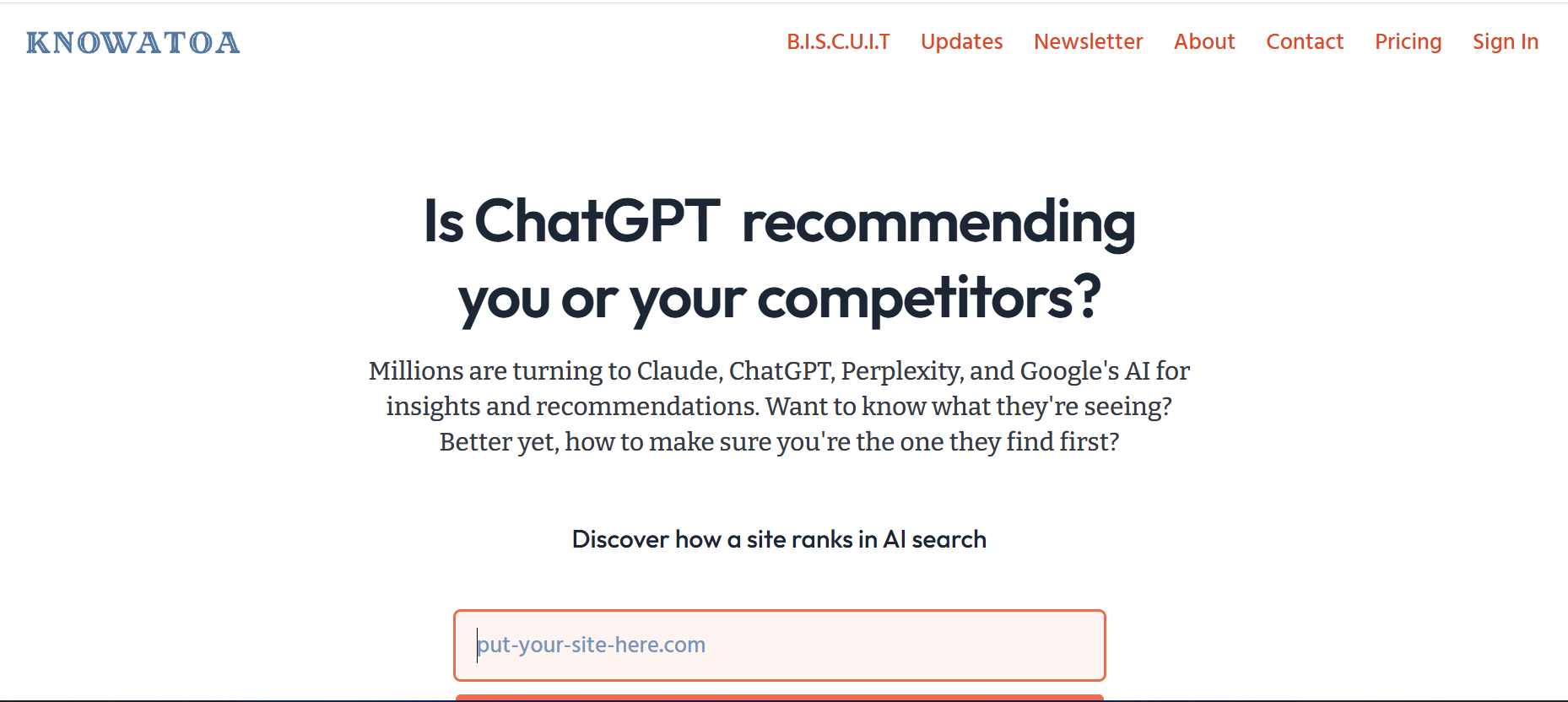
Knowatoa gives you clear, actionable insights into how AI platforms describe your brand or product. You’ll see if you’re being mentioned in AI-generated answers, how frequently, and whether you’re outperforming or trailing competitors.
It also flags technical issues — such as AI bots being blocked from your site or key content sitting behind paywalls — that might be limiting your visibility. Knowatoa alerts you if AI tools are misrepresenting your product or using outdated information, so you can correct it before it confuses potential customers.
Best For: Marketers, SEO professionals, and agencies who want to see how their brand appears in ChatGPT, Gemini, Claude, and other AI search engines.
Pros
- Free plan available.
- Covers all major AI platforms on higher-tier plans.
- Competitor AI performance comparison built in.
- Identifies technical issues that prevent AI models from finding or displaying your content.
- Flags AI misrepresentation of your products — useful for brand consistency.
- Familiar UI that’s easy for SEO teams to navigate without developer help.
Cons
- Free plan limits the number of tracked sites significantly.
- Major AI platforms only covered in plans starting at $249/month.
- No sentiment analysis or detailed user behaviour metrics.
- Still a newer player with limited integrations.
- No public API access yet.
Pricing
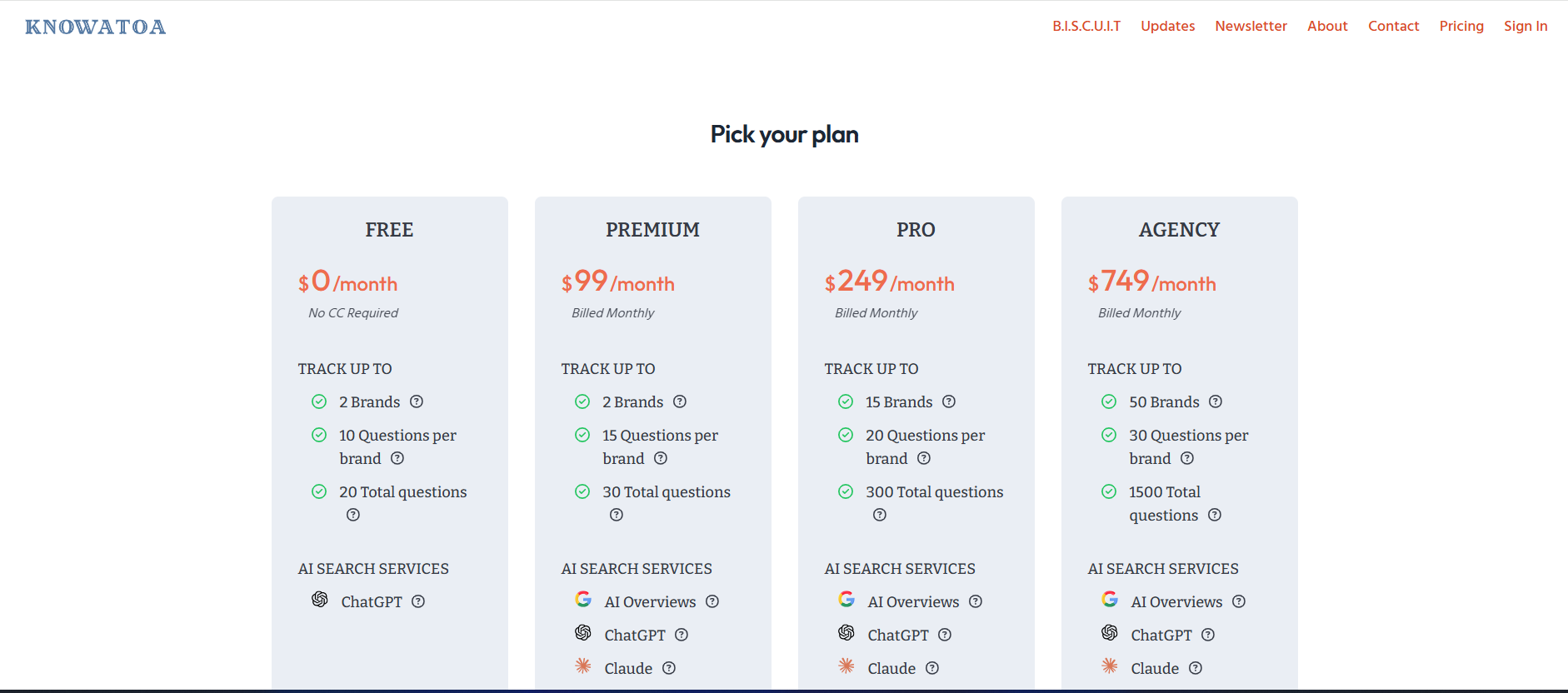
- Free Plan: Monitor up to two websites with a limited number of queries.
- Premium Plan: $99/month, two websites, AI Overviews mention tracking.
- Pro Plan: $249/month, 15 websites, monitors AI Overviews, ChatGPT, Claude, Gemini, Meta, Perplexity.
- Agency: $749/month, 50 websites, full platform coverage.
SEOpital
SEOpital is primarily an AI-powered SEO content creation platform designed to help marketers, bloggers, agencies, and creators generate search-optimised articles at scale.
At its core, it combines AI writing tools with SEO intelligence — offering keyword clustering, SERP analysis, internal linking, multilingual content generation, and plagiarism detection.
Recently, SEOpital added an LLM Tracking feature that helps users monitor brand presence across LLMs such as ChatGPT, Perplexity, and Google AI Overviews. This hybrid approach makes SEOpital one of the first content tools adapting to AI-driven search — letting you create high-quality content and track its performance across both SERPs and AI engines from a single dashboard.
Best For: SEO content writers and marketers who want to create optimised content and track its visibility in both search engines and AI models.
Pros
- Free trial available.
- Combines AI writing, keyword research, SERP analysis, and content optimisation in one tool.
- Tracks mentions and citations across ChatGPT, Perplexity, and Google AI Overviews.
- Clean dashboard, intuitive interface, and automated reporting.
- Flexible monthly plans and one-time credit packs.
Cons
- Learning curve for advanced features.
- Larger teams may find reporting and integrations insufficient for complex workflows.
- Credit-based pricing may be limiting for high-volume teams.
- Some advanced LLM tracking features are only accessible on higher-tier plans.
Pricing
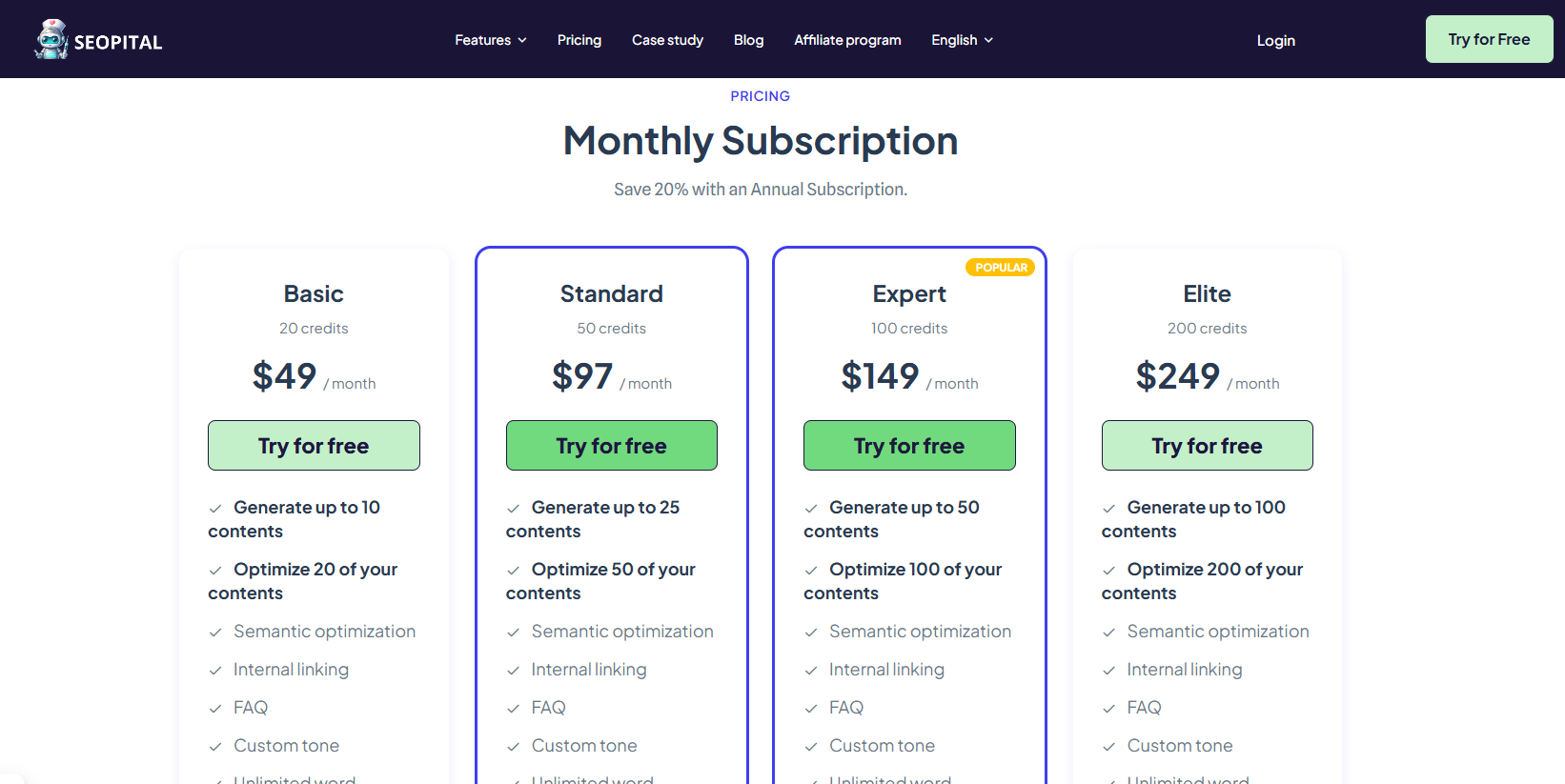
- Basic: $49/month, 20 credits.
- Standard: $97/month, 50 credits.
- Expert: $149/month, 100 credits.
- Elite: $249/month, 200 credits.
LLM Tracking Tools Comparison Table
| Tool | What it tracks | AI platforms | Starting price | Best for |
|---|---|---|---|---|
| Nightwatch | AI Share of Voice, mention rate, citations, sentiment, classic rankings | ChatGPT, Claude, Perplexity, Gemini, AI Overviews | $32/month | All-in-one SEO + LLM brand monitoring |
| Peec AI | Brand visibility, sentiment | ChatGPT, Perplexity, Gemini, AI Overviews | €89/month | Basic LLM brand monitoring |
| Profound AI | Brand mentions, tone, source attribution | ChatGPT, Claude, Gemini, Perplexity, Grok, AI Overviews | $499/month | Enterprise brand tracking |
| Rankscale AI | AI visibility, sentiment, site audits | Multiple LLMs | $20/month | AI-focused site optimisation |
| Scrunch AI | Mentions, sentiment, knowledge accuracy, journey maps | Multiple LLMs, AI Overviews | $300/month | Brand narrative management |
| Keyword.com | Citations, sentiment, keyword triggers | ChatGPT, Claude, Gemini, Perplexity, AI Overviews | $16/month | SEO + AI visibility crossover |
| Otterly AI | Brand visibility, citations, sentiment | ChatGPT, Perplexity, AI Overviews | $29/month | Marketers new to AI tracking |
| Knowatoa AI | Mentions, competitor comparison, technical issues | ChatGPT, Claude, Gemini, Meta, Perplexity, AI Overviews | Free / $99/month | Agencies with multiple sites |
| SEOpital | Mentions, citations | ChatGPT, Perplexity, AI Overviews | $49/month | Content creation + basic LLM tracking |
Frequently Asked Questions
What are LLM tracking tools?
LLM tracking tools are software platforms that monitor how your brand, content, and competitors appear in AI-generated responses from large language models like ChatGPT, Claude, Gemini, and Perplexity. They measure metrics like mention rate, AI Share of Voice, citation frequency, and sentiment — giving marketers and SEO teams the same kind of visibility into AI search that Google Search Console provides for traditional search.
What is LLM brand monitoring?
LLM brand monitoring is the practice of tracking how your brand, products, and messaging appear in AI-generated responses across large language models like ChatGPT, Claude, Gemini, and Perplexity. Unlike traditional brand monitoring (which tracks news articles and social mentions), LLM brand monitoring measures AI Share of Voice — how often your brand is recommended compared to competitors — along with sentiment, factual accuracy, and citation rates. Tools like Nightwatch combine LLM brand monitoring with traditional rank tracking in a single dashboard.
How does LLM rank tracking differ from traditional SEO tracking?
Traditional rank tracking shows your numbered position in blue-link search results. LLM rank tracking measures whether your brand appears in AI-generated answers at all — and how favourably. There are no fixed positions in AI responses; instead, you track Share of Voice (how often your brand appears across a set of monitored prompts) and citation rate (how often AI systems reference your specific pages). See our full breakdown in the LLM rankings guide.
Can LLM tracking tools help improve my visibility in ChatGPT or AI Overviews?
Yes, but indirectly. LLM tracking tools show which queries trigger your content or brand mentions in AI-generated responses. By analysing what content gets cited, you can optimise your pages, authority signals, and content structure to improve visibility — a discipline often called generative engine optimisation. While you can’t “rank” in the traditional sense, you can increase your citation rate by understanding how models choose sources.
Are LLM tracking tools only for developers?
Not at all. While some LLM observability tools are built for developers monitoring model performance in production apps, the tools on this list are designed for marketers, SEOs, and brand teams. Nightwatch in particular combines AI search visibility, citation tracking, sentiment analysis, and traditional rank tracking in one platform — no technical background required.
How much do LLM tracking tools cost?
Pricing varies widely. Entry-level plans start from around $16–$32/month (Keyword.com, Nightwatch), mid-market tools run $89–$249/month, and enterprise-focused platforms like Profound AI start at $499/month. Scrunch AI’s Pro tier reaches $1,000/month. Most tools offer a free trial; Knowatoa has a free plan. The right price point depends on how many prompts you need to track, how many AI platforms you want covered, and whether you need traditional rank tracking bundled in.
Do I need both LLM tracking and traditional rank tracking?
For most teams, yes. Traditional search still drives significant traffic, and the two visibility types serve different intent. The most efficient approach is a unified platform — Nightwatch is the only tool on this list that covers both AI SEO and classic keyword rankings natively, eliminating the need for two separate subscriptions.
Choosing the Right LLM Tracking Tool for Your Team
As AI-generated content becomes the default first result for millions of queries, knowing how and where your brand appears is no longer optional.
To summarise the options:
- Best all-in-one platform: Nightwatch — the only tool here that combines LLM brand monitoring, AI Share of Voice, citation tracking, citation-level sentiment, and traditional rank tracking in a single dashboard.
- Best for enterprises with deep pockets: Profound AI — comprehensive brand mention tracking across all major models.
- Best for content teams: SEOpital — bundles AI writing with basic LLM visibility monitoring.
- Best free starting point: Knowatoa — free plan lets you test AI tracking before committing.
- Best for brand narrative management: Scrunch AI — knowledge hub and journey mapping for teams focused on brand accuracy.
Whichever tool you choose, start tracking now. AI search visibility compounds over time — teams that establish a baseline today will have months of trend data when competitors are still setting up their accounts.
Start tracking your AI rankings with Nightwatch — free for 14 days, no credit card required.