
7 Best Surfer SEO Alternatives for 2026
If you’ve been in the SEO world for more than five minutes, you already know Surfer SEO. For years, it’s been the go-to tool for writers, marketers, and agencies who want to create content that ranks fast.
But here’s the truth no one admits out loud: Surfer SEO isn’t the perfect fit for everyone anymore. Content teams now need tools that go beyond keyword density suggestions or basic NLP terms. They want deeper insights, better AI writing workflows, more customization, and pricing that doesn’t punch a hole in their budget.
So if you’ve found yourself wondering: “Are there any Surfer SEO alternatives I can try?” or “Is Surfer still worth it in 2026?”
You’re not alone. This article breaks down why you might need a Surfer SEO alternative, what to look for in one, and the 7 best tools in 2026 that can help you optimize content faster and more affordably.
Quick Takeaways
- Surfer SEO’s pricing starts at $89/month, making it too expensive for many freelancers and small teams who only optimize a handful of articles each month.
- Surfer has no native rank tracking, which forces you to pay for a separate monitoring tool on top of your content optimization subscription.
- The best Surfer SEO alternatives combine NLP-based content scoring, SERP analysis, and AI writing — without the inflated price tag.
- Tools like Frase, MarketMuse, Clearscope, WriterZen, Content Harmony, and NeuronWriter each solve specific pain points that Surfer leaves unaddressed.
- NightOwl (built on Nightwatch) gives you content optimization and real-time rank tracking in a single platform, eliminating the need for two paid subscriptions.
- Choosing the right alternative depends on your team size, content volume, and whether rank monitoring matters as much as content scoring to your workflow.
Table of Contents
- Why Switch from Surfer SEO?
- What to Look for in a Surfer SEO Alternative
- What Are the Best Surfer SEO Alternatives?
- NightOwl
- Frase
- MarketMuse
- Clearscope
- WriterZen
- Content Harmony
- NeuronWriter
- Surfer SEO Alternatives: Full Comparison Table
- Choosing the Right Surfer SEO Alternative
- FAQ
Why Switch from Surfer SEO?
Surfer SEO is undeniably popular, but it’s far from perfect. Many users eventually start looking for alternatives not because Surfer is bad, but because it doesn’t always fit their workflow, budget, or data needs. Here’s a detailed look at the four most common reasons teams move on.
Pricing Increases Are Hard to Justify
Surfer’s paid plans now start at $89/month for the Essential tier, with the Scale plan sitting at $129/month and the Scale AI plan pushing past $200/month when you factor in the AI writing add-on. For SEO agencies producing dozens of articles a month, that cost can make sense. But for solo creators, early-stage startups, or marketing teams that optimize fewer than 10 pieces per month, paying nearly $1,000 a year for a content scoring tool is difficult to justify — especially when capable alternatives cost a third of that price.
Surfer has also raised its prices several times since 2022, and the feature set available on lower tiers has progressively shrunk. Features that were once standard (such as NLP term suggestions and SERP analyzer access) now require higher-tier subscriptions or add-ons, meaning many users are effectively paying more for less.
AI Content Quality Has Real Limitations
Surfer’s AI writing assistant (marketed as “Surfer AI”) is an add-on that generates articles based on its content score signals. In practice, the output tends to be formulaic: articles that hit recommended keyword frequencies but often lack depth, originality, or brand voice. The tool optimizes for Surfer’s own scoring model rather than for what actually engages readers or builds topical authority.
This is a growing concern as Google’s Helpful Content updates increasingly reward experience-driven, expert content. An AI assistant that produces generic, score-chasing copy creates short-term ranking gains but long-term authority problems. Several best SEO tools now integrate large language models trained on broader datasets with better editorial controls, producing more nuanced output than Surfer AI currently offers.
Over-Reliance on Keyword Density
Surfer’s core optimization methodology centers on matching keyword frequency against top-ranking competitors. While keyword density remains one signal among many, Surfer’s scoring can push writers into unnatural repetition — stuffing terms to hit a green score even when the writing reads awkwardly. This is a form of keyword clustering misapplied: grouping terms for a score rather than for genuine topical coverage.
Modern search engines, particularly post-Helpful Content, weight semantic relevance, entity coverage, and user engagement signals far more heavily than raw keyword counts. Tools built around NLP and entity-based optimization (like MarketMuse or Clearscope) tend to produce content that ages better and requires fewer rewrites after algorithm updates.
No Native Rank Tracking
One of Surfer’s most glaring omissions is the complete absence of built-in rank tracking. After you optimize and publish a piece, Surfer gives you no way to monitor whether your content is actually climbing in the SERPs. You are forced to subscribe to a separate rank tracker — tools like Nightwatch, Ahrefs, or SEMrush — adding another $30–$100+ per month on top of your Surfer bill.
This fragmentation is more than a cost issue. It means your optimization data and your performance data live in separate platforms, making it harder to close the feedback loop between “what we changed” and “how rankings responded.” A Surfer alternative that includes native rank tracking eliminates this problem entirely.
What to Look for in a Surfer SEO Alternative
Before you choose a replacement, it’s important to understand what actually makes a content optimization tool worth using in 2026. Here are the five criteria that matter most.
1. SERP Analysis Depth
Any Surfer SEO alternative you consider must offer reliable, up-to-date SERP analysis — not just top-10 snapshots but actual insight into why pages rank: backlink profiles, content structure, entity coverage, and featured snippet patterns. Search results now shift faster than they did a few years ago due to AI-driven indexing and frequent algorithm refreshes. Look for an alternative that pulls fresh keyword difficulty metrics, search intent indicators, and live SERP snapshots so your strategy reflects what’s ranking right now, not what ranked six months ago.
2. NLP and Semantic Integration
One of the biggest complaints about Surfer is how easily it pushes users toward formulaic, keyword-heavy writing. A good alternative should help you optimize your content using natural language processing and semantic relevance — understanding entities, synonyms, and contextual co-occurrence rather than just counting keyword instances. This ensures you produce content that ranks in both traditional SERPs and AI-generated answer results without sounding like a machine. Look for tools that surface NLP recommendations grounded in how language actually works rather than how many times a phrase appears on competitor pages.
3. Content Scoring Methodology
Not all content scores are equal. Some tools (like Surfer) score primarily based on keyword frequency matching. Others (like MarketMuse and Clearscope) score on topical coverage, entity inclusion, and semantic depth. The latter approach produces content that is harder to “game” and more durable across algorithm updates. Before committing to an alternative, understand what the tool’s score actually measures. A good content score should correlate with genuine quality signals — depth of coverage, citation quality, heading structure, and internal link density — not just term frequency.
4. Built-In Rank Tracking
Modern SEO tools should close the loop between optimization and outcomes. A tool that helps you optimize content but gives you no visibility into whether rankings are actually moving is only doing half the job. Look for alternatives that include native rank tracking so you can monitor keyword positions, measure the impact of content changes over time, and prioritize your next optimization effort based on real performance data. This is one area where Nightwatch’s rank tracker genuinely excels — offering daily rank updates across multiple search engines and locations without requiring a separate subscription.
5. Pricing Scalability
Surfer’s biggest drawback for many marketers is pricing that doesn’t scale gracefully. As your content volume grows or you add team members, costs escalate quickly. Your chosen alternative should offer flexible plans that don’t force you to pay extra just to unlock essential features like content briefs, content gap analysis, or team seats. Pay attention to per-article pricing models versus flat subscriptions — at high volumes, per-article tools can become far more expensive than they initially appear.
What Are the Best Surfer SEO Alternatives?
If you’re looking for tools that can help you optimize content, research keywords, and stay ahead of your competition without the limitations of Surfer SEO, here’s a sneak peek at the top alternatives:
- NightOwl: Real-time SEO data, AI writing, and deep keyword research with built-in rank tracking
- Frase: Strong content briefs and AI writing for content teams
- MarketMuse: High-quality topic modeling and long-form optimization
- Clearscope: Content optimization with excellent readability scoring
- WriterZen: Keyword clustering, competitive research, AI writing
- Content Harmony: Streamlined content research, project management, and optimization workflows
- NeuronWriter: Budget-friendly NLP optimization and SERP data
NightOwl
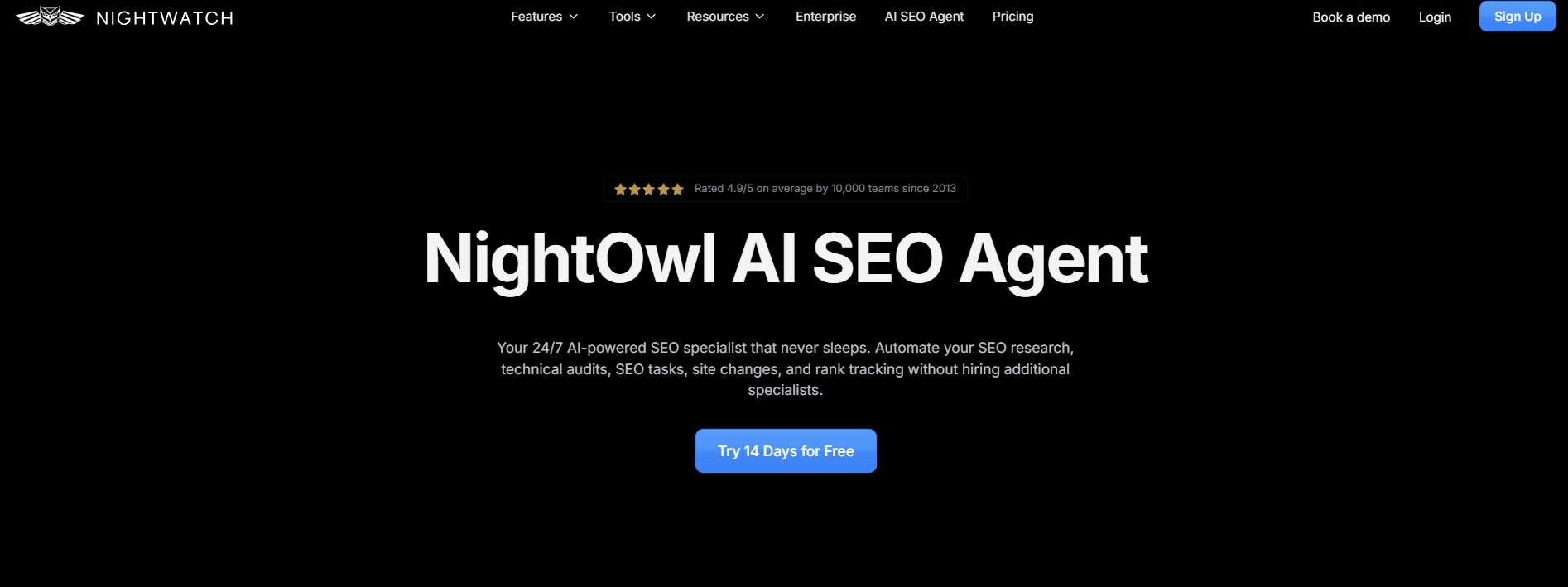
NightOwl is quickly becoming a favorite for marketers looking for a full-featured SEO platform that goes beyond basic content optimization. Unlike Surfer SEO, which often relies on estimated content scores, NightOwl provides actionable insights drawn from real-time SERP data so you can make smarter decisions about your content strategy. Its ability to track your rankings over time ensures you can see exactly how your content performs and make adjustments as needed.
One standout feature of NightOwl is its AI-powered content assistant, which helps you draft optimized copy and offers contextual recommendations. For instance, it can suggest internal linking opportunities, highlight gaps in topic coverage, and advise on keyword usage to improve your content relevance. These insights make it easier to create content that aligns with search intent and performs well in search engines. NightOwl also offers deep keyword research capabilities, which allow you to uncover long-tail opportunities that might be overlooked by other platforms.
What NightOwl Does Better Than Surfer
The most meaningful difference between NightOwl and Surfer is the combination of content optimization with native rank tracking in a single subscription. Surfer tells you how to optimize a page — NightOwl also tells you whether that optimization is actually moving the needle. This closed feedback loop is something Surfer simply cannot provide without a third-party integration. On top of that, NightOwl’s content scoring is grounded in real SERP data rather than competitor-average models, which means its recommendations tend to be more targeted and less prone to over-optimization. The pricing is also substantially more accessible, starting at $32/month compared to Surfer’s $89/month entry point.
Best for: Marketers and small-to-mid SEO teams who want content optimization and rank tracking in one platform without paying for two separate subscriptions.
Key Features
- Real-time SEO data for precise optimization decisions.
- AI-powered content assistant for drafting and optimizing copy.
- In-depth keyword research, including long-tail keywords.
- Rank tracking to monitor content performance over time.
- Contextual optimization advice, including interlinking suggestions.
- Competitor analysis for identifying gaps and opportunities.
Pros
- Provides actionable insights based on real SERP data.
- Strong AI writing and optimization guidance saves time.
- Includes rank tracking to monitor content performance.
- Offers interlinking and contextual optimization advice.
- Flexible for freelancers, small teams, and larger departments.
Cons
- Lacks some advanced reporting features for very large enterprises.
- Fewer third-party integrations compared to bigger SEO suites.
- Some features may take time to fully understand for beginners.
- AI suggestions sometimes need manual refinement for perfect results.
Pricing
NightOwl is available to all Nightwatch subscribers and starts at $32 a month.
Frase
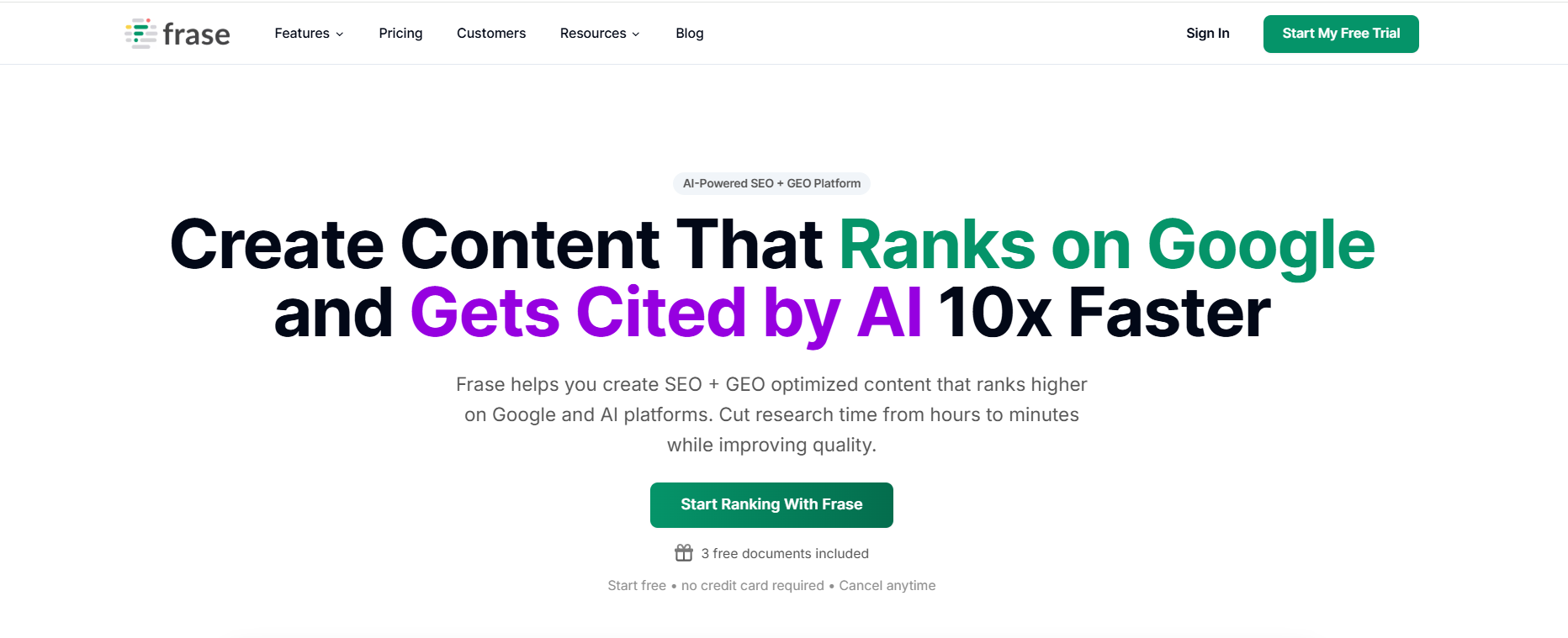
Frase is a powerful SEO and content optimization tool that focuses on helping marketers and content teams create high-quality content efficiently. It’s best known for its ability to generate detailed content briefs, which can save hours of research time. These briefs analyze top-ranking pages, identify key topics and questions, and provide clear guidance on what to include in your content.
Beyond content briefs, Frase offers AI-powered writing assistance that helps you draft articles, blog posts, or landing pages directly within the platform. Its contextual recommendations guide you on optimizing headings, incorporating important keywords, and covering relevant subtopics. Frase also includes built-in analytics to track how your content performs, and it can even provide suggestions to improve engagement and readability.
What Frase Does Better Than Surfer
Frase’s content briefs are consistently regarded as more thorough and usable than Surfer’s. Where Surfer briefs lean heavily on keyword lists and heading suggestions derived from competitor frequency analysis, Frase briefs include actual questions being asked in the SERPs, PAA box data, and subtopics extracted through semantic analysis. This makes Frase briefs a better starting point for writers who need to understand what readers actually want to know rather than just which terms to include. For content teams running at scale, Frase’s workflow and collaboration tools also provide a more structured environment than Surfer’s relatively lightweight interface.
Best for: Content teams and agencies that prioritize high-quality research briefs, question-based optimization, and collaborative writing workflows.
Key Features
- AI-powered content assistant for drafting optimized content.
- Automated content briefs based on top-ranking pages.
- Keyword and topic research integrated into briefs.
- Content scoring and optimization suggestions for better performance.
- Built-in analytics to track content engagement and rankings.
- Ability to answer common user questions and optimize for intent.
- Workflow management features for team collaboration.
Pros
- Saves time with automated content briefs and topic research.
- Strong AI writing support for faster content creation.
- Helps optimize content for search intent and user questions.
- Built-in analytics provides insight into content performance.
- Great for both teams and individual freelancers.
Cons
- Some AI-generated suggestions may need manual adjustments.
- Limited integrations compared to larger SEO suites.
- Can be overwhelming for beginners due to many features.
- Advanced analytics may require a higher-tier plan.
Pricing
Pricing starts at $38 a month.
MarketMuse
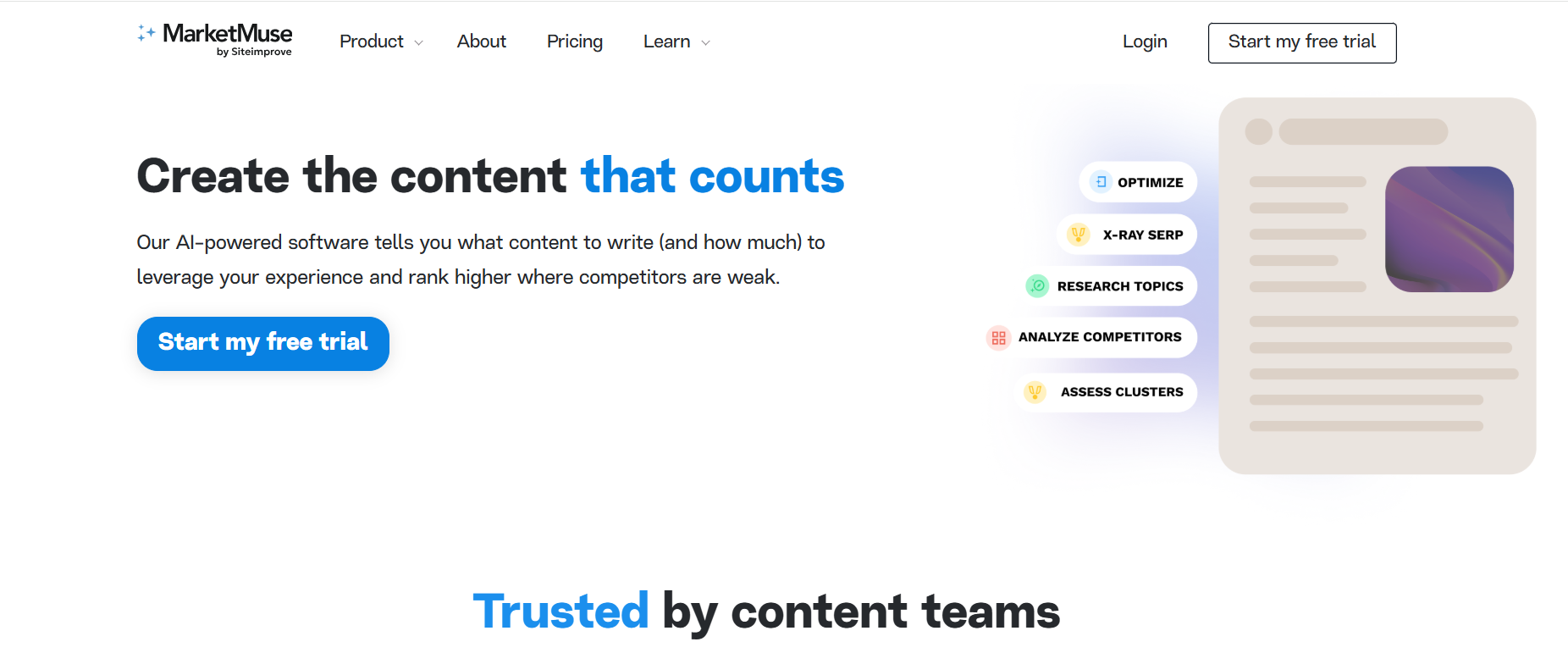
When it comes to creating truly authoritative content, understanding the full scope of a topic is key. MarketMuse excels at this by using AI to map out the landscape of any niche. Rather than relying solely on basic on-page scoring like many SEO tools, MarketMuse helps you uncover content gaps, identify high-impact opportunities, and plan articles that thoroughly satisfy both readers and search engines.
Its content scoring system evaluates depth, relevance, and authority, giving you a clear sense of how your content stacks up against competitors. The platform also helps prioritize which content opportunities will deliver the most value, letting teams focus on pieces that can significantly improve rankings and visibility.
What MarketMuse Does Better Than Surfer
MarketMuse operates on a fundamentally different model than Surfer. Rather than scoring a single document against competitor keyword frequencies, MarketMuse models your entire domain’s topical authority and identifies exactly which topics you are under-covered on relative to your niche. This makes it far more powerful for long-term content strategy: it tells you not just how to improve a single article but how to build a comprehensive content program that establishes your site as an authoritative source. For teams investing in content gap analysis and topical authority building, MarketMuse provides a level of strategic insight that Surfer simply wasn’t designed to deliver.
Best for: Enterprise content teams and SEO strategists focused on building long-term topical authority rather than optimizing individual pages in isolation.
Key Features
- AI-powered topic modeling for thorough content coverage.
- Automated content briefs with recommended keywords and subtopics.
- Content scoring to assess relevance, depth, and authority.
- Gap analysis to find missed opportunities in your niche.
- Opportunity prioritization to maximize content impact.
- Competitor content analysis for benchmarking.
- Workflow tools for managing multiple content projects.
Pros
- Helps produce in-depth, authoritative content that ranks well.
- Data-driven insights remove guesswork from content planning.
- Prioritizes high-impact content opportunities for ROI.
- Strong competitive analysis features.
- Suitable for teams of all sizes, from freelancers to enterprises.
Cons
- Pricing may be high for small teams or freelancers.
- Advanced features can take time to master.
- Some analytics are limited to higher-tier plans.
- Focuses more on content depth than basic on-page SEO tasks.
Pricing
MarketMuse’s pricing starts at $99 per month.
Clearscope
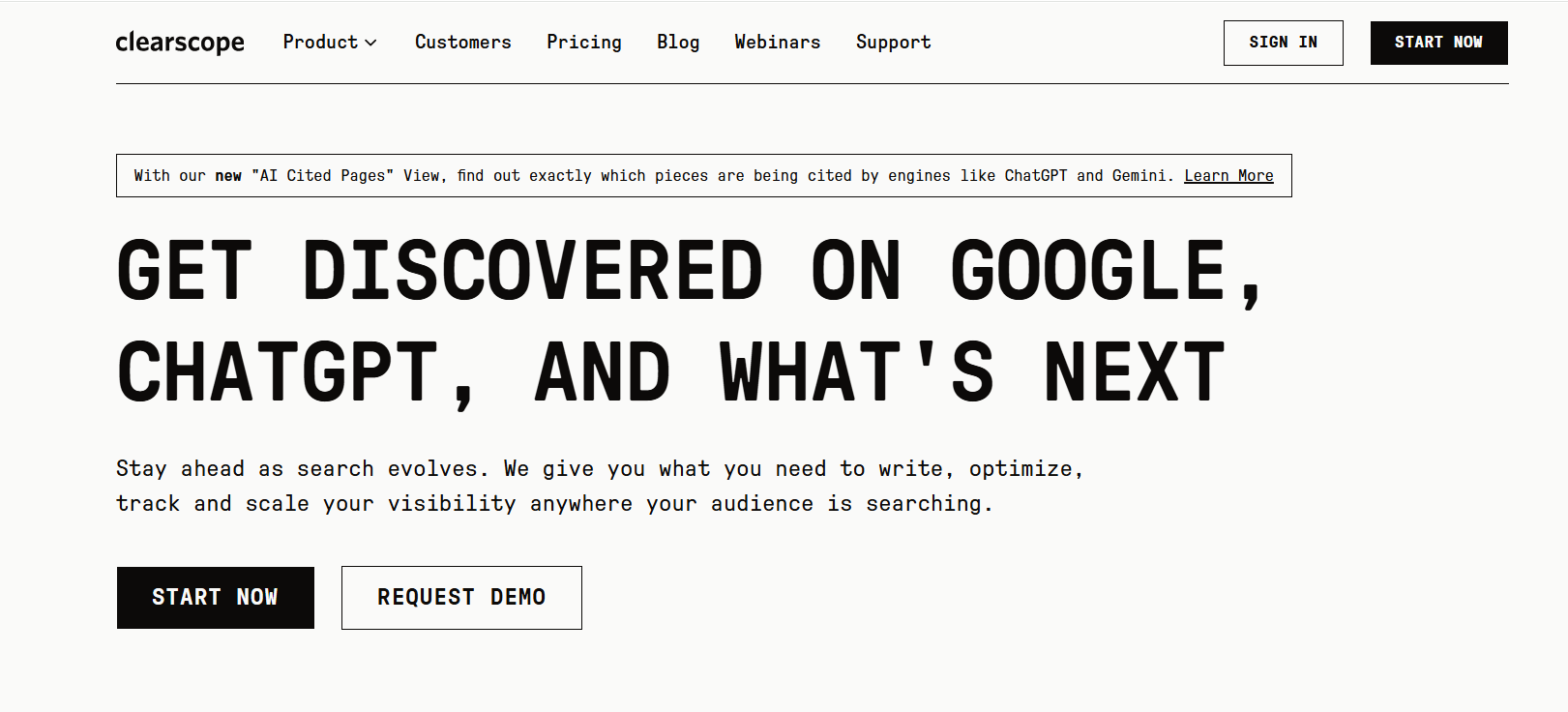
Ranking high in search engines requires creating content that’s readable, relevant, and authoritative. Clearscope makes this process straightforward through a combination of keyword research, content grading, and readability analysis in one platform. The tool analyzes top-performing content and provides actionable recommendations to improve your own articles. This ensures your content is optimized for both search engines and readers.
What Clearscope Does Better Than Surfer
Clearscope’s approach to content grading is more editorially sound than Surfer’s. Instead of pushing writers to hit a numeric score through keyword repetition, Clearscope grades content on a letter system (A+ to D) that weighs semantic coverage, relevant term inclusion, and readability together. This produces a gentler optimization experience that retains writer voice much better than Surfer’s often aggressive keyword quotas. Clearscope’s integrations with Google Docs and WordPress are also more robust and reliable in practice, making it the preferred choice for editorial teams that want SEO guidance embedded in their existing writing workflow rather than in a separate platform.
Best for: Editorial teams and individual writers who want clean, non-intrusive SEO guidance embedded in their Google Docs or WordPress workflow.
Key Features
- Keyword research with semantic analysis.
- Content grading for relevance and comprehensiveness.
- Readability scoring to improve user engagement.
- Optimization suggestions based on top-ranking content.
- Integration with major CMS platforms for workflow ease.
- Competitive analysis for benchmarking content performance.
- Collaboration tools for team-based content creation.
Pros
- Simple, intuitive interface for fast optimization.
- Focuses on both SEO and readability for better engagement.
- Provides actionable suggestions based on real data.
- CMS integrations make content creation seamless.
- Great for content teams and individual writers alike.
Cons
- Limited advanced analytics compared to some larger SEO suites.
- Fewer workflow features for larger enterprises.
- May feel expensive for freelancers or small teams.
- Some users may want deeper keyword research capabilities.
Pricing
Pricing starts at $129 per month.
WriterZen
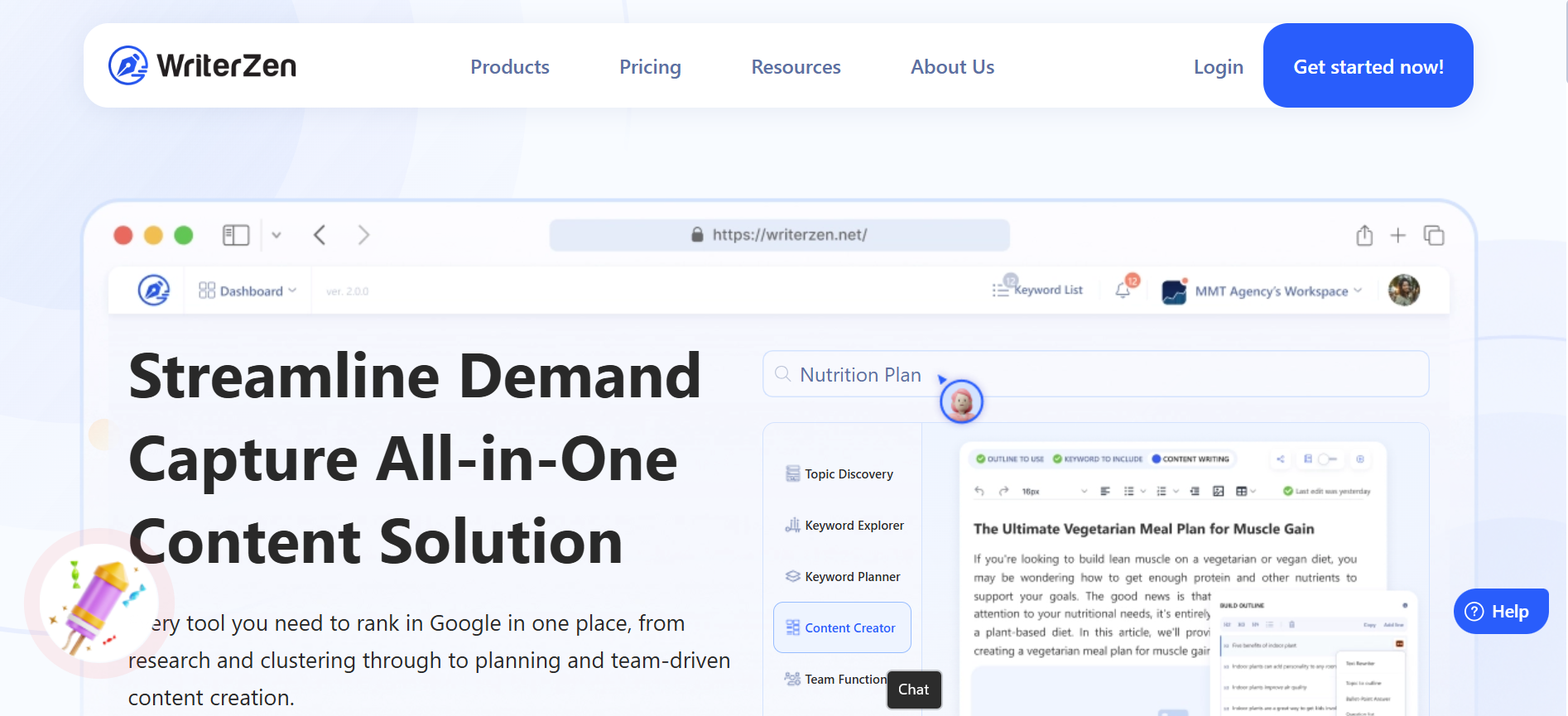
Many SEO tools focus on metrics, scores, and charts, but WriterZen takes a different approach: it transforms keyword research and content planning into a creative, organized workflow. Instead of overwhelming you with raw data, it helps you see the bigger picture of your niche, cluster related keywords, and discover content opportunities you might have missed. This makes content planning feel less like a chore and more like mapping out a strategy for meaningful engagement.
WriterZen’s strength lies in its combination of data and structure. Its keyword clustering tool groups related terms logically, helping you visualize content silos and topic relationships before you even start writing. Meanwhile, its AI assistant provides suggestions as you draft, so your content is both optimized and naturally readable. Competitive research is built into the workflow, giving insights into what’s working in your space and helping you make smarter decisions.
What WriterZen Does Better Than Surfer
WriterZen’s biggest advantage over Surfer is its keyword clustering engine, which is among the most intuitive available in this price range. Where Surfer treats each document as an isolated optimization task, WriterZen encourages you to think in clusters — grouping related queries, identifying parent and child topics, and mapping out a content architecture before writing begins. This strategic layer makes WriterZen a better fit for teams that want to build out a whole content silo rather than optimize individual pages one at a time. Its lifetime pricing model (available periodically) also makes it one of the most cost-effective options on this list for teams with stable content programs.
Best for: Content strategists and SEO teams focused on keyword clustering, content silo architecture, and organized topic planning at an accessible price point.
Key Features
- Keyword clustering for logical content organization.
- AI-powered writing assistance for drafting and optimization.
- Competitive research tools to uncover opportunities.
- Content ideation and topic discovery for creative planning.
- SERP analysis to inform content strategy.
- Workflow and project management tools for teams.
- SEO performance tracking to measure results.
Pros
- Makes SEO research feel organized and intuitive.
- AI assistant improves writing speed without losing quality.
- Clustering helps create comprehensive content strategies.
- Built-in competitor insights support smarter decisions.
- Ideal for freelancers and content teams alike.
Cons
- Advanced features may take time to learn.
- AI suggestions sometimes require manual refinement.
- Some functionality is limited in lower-tier plans.
- Less robust analytics compared to enterprise SEO tools.
Pricing
Starts at a one-time payment of $75.
Content Harmony
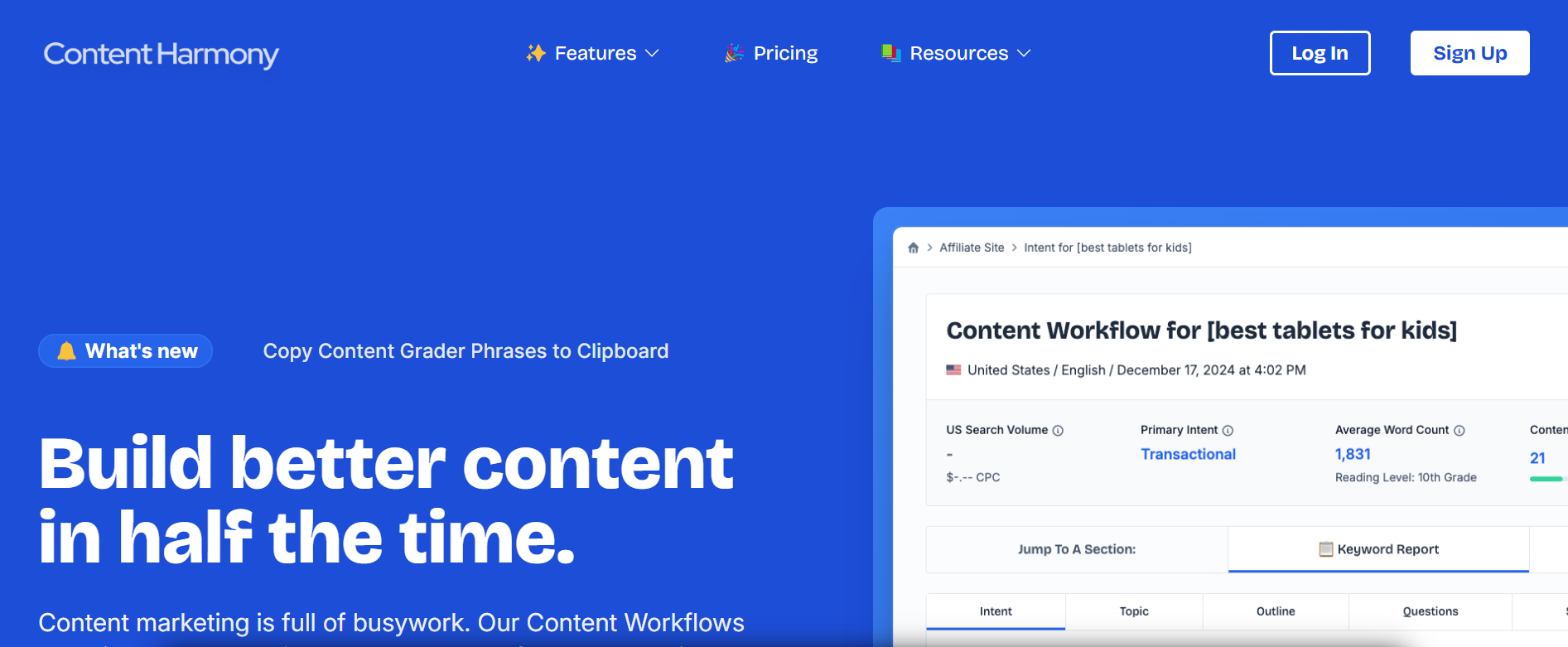
Content Harmony approaches SEO and content planning as a strategic process, helping teams transform research into actionable content plans. Instead of throwing raw metrics at you, it organizes ideas, identifies gaps, and prioritizes topics that will have the most impact.
You can map out content projects, assign tasks, and ensure that every piece of content aligns with broader marketing goals. Its research tools provide context and optimization advice, highlighting what your content needs to answer readers’ questions and cover topics comprehensively.
What Content Harmony Does Better Than Surfer
Content Harmony’s content briefs are designed with real editorial workflows in mind. Each brief includes a search intent analysis, a recommended page type, topic coverage requirements, and competitor gap insights — all presented in a format that writers and editors can act on immediately without having to interpret raw SEO data. This editorial-first approach makes Content Harmony particularly valuable for agencies managing freelance writers who need clear, structured direction rather than a tool to interact with themselves. The project management layer also allows content leads to track briefs through production, which is something Surfer’s platform doesn’t support.
Best for: Content agencies and in-house teams managing multiple writers who need production-ready briefs with built-in editorial workflow management.
Key Features
- Content briefs that guide topic coverage and keyword usage.
- Strategic planning tools for mapping content projects.
- Contextual optimization and interlinking advice.
- Competitive research for benchmarking and gap analysis.
- Prioritization of content opportunities based on impact.
- Analytics to track performance and refine strategies.
Pros
- Helps teams plan content strategically rather than just optimizing pages.
- Provides actionable interlinking and contextual recommendations.
- Competitive research identifies gaps and opportunities.
- Workflow and task management streamline collaboration.
- Ideal for teams aiming to create a cohesive content strategy.
Cons
- Can feel complex for individual freelancers or beginners.
- Some advanced features are locked behind higher-tier plans.
- Less AI writing support compared to other tools.
- Not focused on detailed on-page SEO metrics alone.
Pricing
Pricing starts at $50 per month.
NeuronWriter
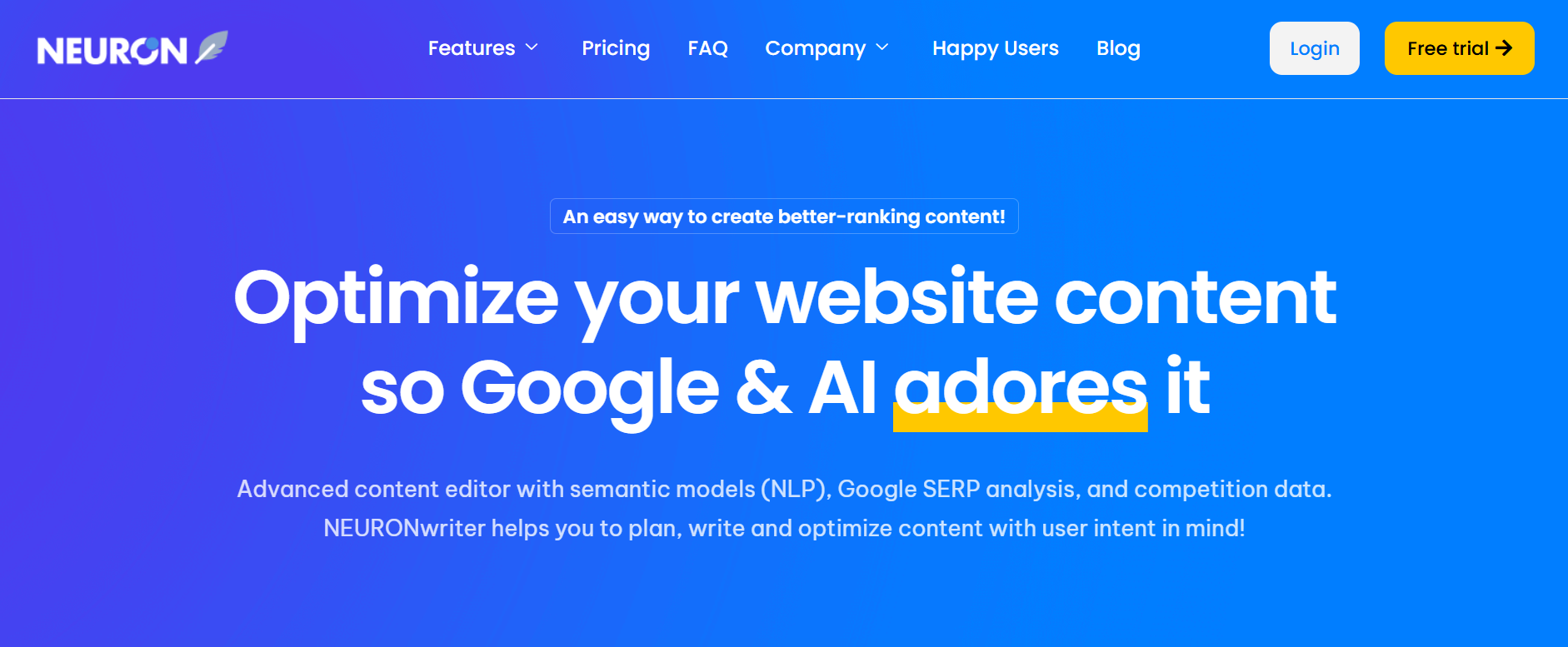
If you are a marketer who wants actionable SEO insights without getting lost in an overly complicated dashboard, NeuronWriter is a tool worth checking out. It focuses on giving real-time guidance while you write, highlighting exactly what your content needs to rank better. It suggests keywords, optimizes headings, and provides insight into your content’s readability and semantic relevance. Its SERP analysis shows what’s currently ranking in your niche, helping you understand where your content can outperform competitors.
What NeuronWriter Does Better Than Surfer
NeuronWriter’s most compelling advantage over Surfer is price-to-value ratio. At $23/month, it offers NLP-based content scoring, SERP analysis, and a semantic term recommendation engine that is genuinely comparable to Surfer’s core functionality at roughly one-quarter the cost. The interface is streamlined and quick to learn, making it accessible to freelancers and small teams who don’t have the time to navigate a complex platform. For users who primarily need on-page optimization guidance without the full suite of AI writing, topic modeling, or enterprise workflow features, NeuronWriter delivers what matters at a price that makes sense.
Best for: Freelancers, bloggers, and small teams that need solid NLP-based content optimization on a tight budget without paying for features they won’t use.
Key Features
- Real-time content optimization guidance while writing.
- Keyword suggestions for improved search performance.
- SERP analysis to understand top-ranking content.
- Semantic relevance scoring for better topic coverage.
- Readability checks to ensure audience engagement.
- Affordable, accessible interface for freelancers and small teams.
- Actionable recommendations for headings, structure, and internal linking.
Pros
- Streamlined, easy-to-use platform for content optimization.
- Provides actionable recommendations in real-time.
- Affordable alternative suitable for freelancers and small teams.
- Balances SEO requirements with readability and engagement.
- SERP analysis helps refine content strategy effectively.
Cons
- Fewer advanced analytics compared to enterprise tools.
- Some AI suggestions may need manual adjustment.
- Limited workflow or project management features.
- Not as feature-rich for large content teams or agencies.
Pricing
Pricing starts at $23 a month.
Surfer SEO Alternatives: Full Comparison Table
| Tool | Content Optimisation | Rank Tracking | AI Writing | Starting Price | Best For |
|---|---|---|---|---|---|
| Surfer SEO | Yes (keyword density-based) | No | Add-on ($extra) | $89/month | Established teams already in the Surfer ecosystem |
| NightOwl | Yes (SERP-grounded) | Yes (native) | Yes (included) | $32/month | Teams wanting content optimization + rank tracking in one |
| Frase | Yes (NLP briefs) | Limited | Yes | $38/month | Content teams prioritizing research briefs |
| MarketMuse | Yes (topical authority) | No | Limited | $99/month | Enterprise teams building content authority |
| Clearscope | Yes (semantic grading) | No | No | $129/month | Editorial teams in Google Docs / WordPress |
| WriterZen | Yes (clustering-first) | Limited | Yes | $75 one-time | Teams focused on content silo architecture |
| Content Harmony | Yes (brief-focused) | No | Limited | $50/month | Agencies managing freelance writers |
| NeuronWriter | Yes (NLP-based) | No | Yes | $23/month | Freelancers and small teams on a budget |
Choosing the Right Surfer SEO Alternative
Choosing the right SEO tool can make all the difference in how efficiently you plan, optimize, and track your content. While Surfer SEO has been a popular choice for content optimization, many marketers are seeking alternatives that offer more flexibility, deeper insights, or better value for money.
Tools like Frase, MarketMuse, Clearscope, WriterZen, Content Harmony, and NeuronWriter each bring unique strengths, ranging from AI-driven content briefs and topic modeling to workflow management and competitor analysis. Depending on your goals, team size, and budget, one of these alternatives could better fit your needs while helping you create content that ranks and engages readers effectively.
Among all these options, NightOwl stands out as a top choice for marketers looking for a Surfer SEO alternative. It combines real-time SEO insights, AI-powered content recommendations, comprehensive keyword research, and rank tracking into a single platform. For teams that have been paying for Surfer and a separate rank tracker side-by-side, switching to NightOwl can consolidate that spend into one subscription at a lower total cost.
If rank performance visibility matters to your workflow — and it should, because content optimization without outcome measurement is guesswork — then pairing any content optimization tool with Nightwatch’s rank tracker gives you the feedback loop you need. Nightwatch tracks daily ranking changes across Google, Bing, Yahoo, and local packs, letting you attribute ranking movement to specific content changes and prioritize your next optimization sprint accordingly. For more on picking the right mix of tools, see our guide to the best SEO tools and best Ahrefs alternatives.
Ready to optimize smarter and get better results than ever? Explore NightOwl today and see why it’s the preferred choice for marketers seeking a complete Surfer SEO alternative.
FAQ
Is Surfer SEO worth it in 2026?
Surfer SEO is still a capable content optimization tool, but its value proposition has weakened as competitors have closed the feature gap at lower price points. The main reasons to stay with Surfer are familiarity and workflow integration. The main reasons to consider switching are the $89/month starting price, the absence of native rank tracking, and the AI writing quality limitations. If you’re already paying for a separate rank tracker alongside Surfer, you’re likely paying more than you need to.
What is the cheapest Surfer SEO alternative?
NeuronWriter is the most affordable like-for-like replacement, starting at $23/month with NLP-based content scoring and SERP analysis included. WriterZen also offers one-time pricing (starting at $75) which makes it extremely cost-effective for teams with predictable content volume. For the best value when combining content optimization with rank tracking, NightOwl starts at $32/month and includes both capabilities in a single subscription.
Do any Surfer SEO alternatives include rank tracking?
Most content optimization tools — including Frase, MarketMuse, Clearscope, WriterZen, Content Harmony, and NeuronWriter — do not include meaningful native rank tracking. NightOwl is the standout exception: it is built on Nightwatch’s rank tracking infrastructure and includes daily rank monitoring as part of its core offering. This makes it the natural choice for teams that want to close the loop between content optimization and search performance without subscribing to two platforms.
Which Surfer SEO alternative is best for agencies?
For agencies managing multiple clients and writers, Content Harmony’s brief-centered workflow and production management tools make it a strong choice. Frase is also widely used by agencies for its fast brief generation and team collaboration features. For agencies that also need to report on client rank tracking and search visibility, Nightwatch offers white-label reporting and multi-site management that can be paired with any content optimization tool on this list.
How does Surfer SEO compare to MarketMuse?
Surfer SEO and MarketMuse operate at different strategic levels. Surfer is a document-level optimization tool: you bring a target keyword, Surfer analyzes competitor pages, and you optimize your draft to match. MarketMuse operates at a domain and topic level: it models your entire site’s topical authority and identifies which subjects you need to cover more comprehensively to compete in your niche. MarketMuse is better for long-term content strategy; Surfer is better for fast, isolated page optimization. For teams serious about building durable topical authority, MarketMuse (or the topical modeling layer in NightOwl) provides strategic depth that Surfer was never designed to offer.